


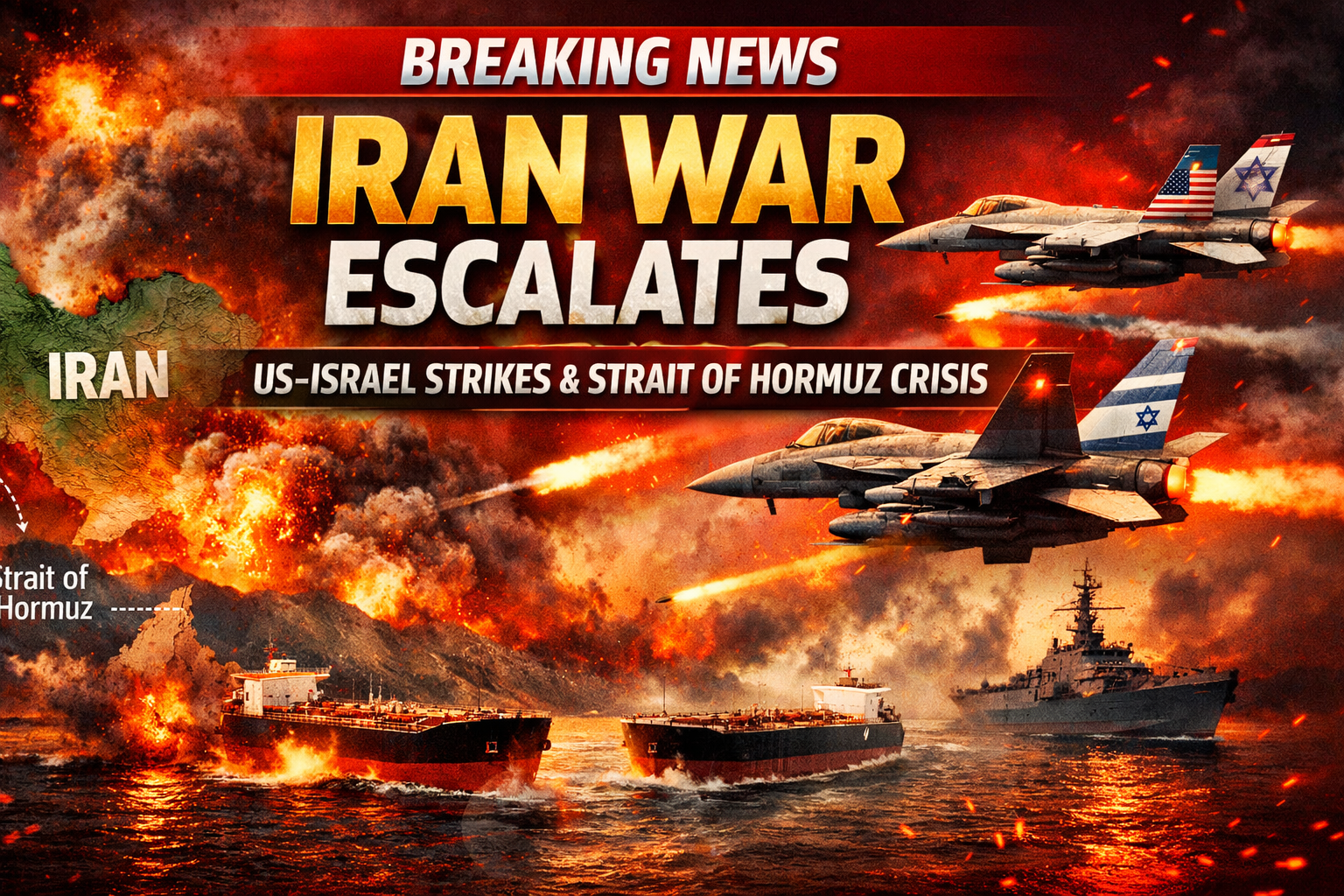
Iran War Escalates US Israel Strikes, Strait of Hormuz Tensions and Global Security Concerns
The escalating Iran war crisis has pushed the Middle East into one of the most dangerous geopolitical situations in recent years. Recent US Israel strikes on Iran have intensified tensions across the region and triggered a wave of international concern. The attacks targeted multiple Iranian military and nuclear-related facilities, raising fears of retaliation, regional instability, and disruptions to global energy markets.
The growing conflict has drawn attention from world leaders, international organizations, and security analysts who warn that continued escalation could lead to a broader Middle East conflict. At the center of global concern is the strategic Strait of Hormuz, a vital maritime route through which a large portion of the world’s oil supply passes.
As tensions rise between Iran, Israel, and the United States, the possibility of further military confrontations, economic disruption, and diplomatic fallout continues to grow.
US Israel Strikes on Iran Intensify Regional Tensions
Military Operations Target Iranian Facilities
US Israel strikes on Iran
The latest US-Israel military strikes on Iran targeted key installations believed to be connected to Iran’s military capabilities and nuclear infrastructure. Officials from both countries claimed the operation aimed to prevent Iran from strengthening its strategic weapons programs and to reduce potential security threats.
These strikes were carried out using advanced air power and precision-guided weapons aimed at weakening Iran’s defense infrastructure. Reports indicate that several military bases and strategic sites were targeted during the operation.
The scale of the attacks has significantly heightened tensions across the Middle East and raised fears that the conflict could escalate into a wider regional war.
Israel’s Security Concerns
Israel has long expressed concern over Iran’s nuclear program and regional influence. Israeli officials argue that Iran’s military activities and support for allied groups across the region pose a direct threat to Israeli security.
As a result, Israel has repeatedly warned that it is prepared to take military action if it believes Iran is developing capabilities that could threaten its national security.
The recent strikes demonstrate Israel’s willingness to use force in order to counter what it perceives as growing strategic risks.
TAP FOR MORE NEWS HERE
Iran’s Response and Regional Repercussions
Retaliatory Military Actions
Following the, Iranian officials strongly condemned the strikes and warned that the country would respond. Iran has launched missile and drone operations targeting military positions linked to US and Israeli interests in the region.
These retaliatory actions have increased the risk of a prolonged conflict. Iran has also mobilized its regional allies, including armed groups operating in neighboring countries.
Such developments have raised fears that the crisis could expand beyond Iran and Israel, potentially drawing multiple countries into a broader regional confrontation.
Expanding Middle East Conflict
The conflict has already begun affecting several parts of the Middle East. Military activity and security alerts have increased in multiple countries as governments prepare for possible escalation.
Regional powers are closely monitoring the situation while strengthening their defense readiness. Many experts warn that if the cycle of retaliation continues, the conflict could evolve into a large-scale Middle East security crisis.
Strait of Hormuz Crisis and Global Energy Risks
Strategic Importance of the Strait of Hormuz
One of the most serious concerns surrounding the Iran conflict is the potential disruption of the Strait of Hormuz, a critical global shipping route. The strait connects the Persian Gulf to international waters and serves as a major corridor for global oil exports.
Approximately one-fifth of the world’s oil supply travels through this narrow waterway, making it one of the most strategically important maritime routes in the world.
Any disruption to shipping in the Strait of Hormuz could have immediate consequences for global energy markets and international trade.
Shipping Disruptions and Security Concerns
As tensions escalate, shipping companies and oil tankers have become increasingly cautious about operating in the region. Some vessels have delayed travel through the strait due to fears of military confrontation or maritime attacks.
Insurance costs for shipping routes in the region have also increased significantly, reflecting the growing security risks.
If the situation worsens, the disruption of maritime traffic in the Strait of Hormuz could trigger a global energy supply crisis and drive oil prices sharply higher.
Global Economic and Security Implications
Impact on Global Oil Markets
The escalating Iran Israel conflict has already begun affecting global energy markets. Oil prices have risen as investors react to the possibility of supply disruptions in the Persian Gulf.
Energy analysts warn that prolonged instability in the region could lead to sustained increases in oil prices, affecting economies around the world.
Countries that rely heavily on Middle Eastern oil imports could face economic pressure if the crisis continues.
Disruptions to Global Trade
Beyond oil markets, the conflict could also affect international shipping and trade routes. Cargo vessels traveling through the Persian Gulf region may face delays or rerouting due to security concerns.
These disruptions could increase shipping costs and slow the movement of goods across global supply chains.
Industries dependent on international logistics may experience shortages and price increases if transportation routes become unstable.
International Reactions and Diplomatic Efforts
Calls for De-escalation
Many world leaders have urged restraint following the US Israel strikes on Iran. Governments and international organizations have called for diplomatic engagement to prevent the conflict from escalating further.
Global powers are concerned that continued military confrontation could destabilize the Middle East and create long-term geopolitical tensions.
Diplomatic channels remain active as countries attempt to reduce hostilities and encourage dialogue between the involved parties.
Role of International Organizations
International organizations are closely monitoring the crisis and encouraging negotiations to prevent a wider conflict. Efforts are being made to bring the involved parties toward diplomatic discussions aimed at reducing tensions.
However, with military operations and retaliatory attacks still occurring, achieving a quick resolution remains challenging.
Conclusion
The escalating Iran war crisis involving US Israel strikes on Iran has created a volatile situation in the Middle East. Retaliatory attacks, rising geopolitical tensions, and the threat to key global shipping routes such as the Strait of Hormuz have heightened concerns about regional and global stability.
The conflict has already begun affecting energy markets, international trade, and global security dynamics. As tensions continue to rise, the international community faces the urgent challenge of preventing the situation from escalating into a broader war.
Diplomatic solutions will play a critical role in determining whether the crisis can be contained or whether the Middle East will face a prolonged period of instability.