


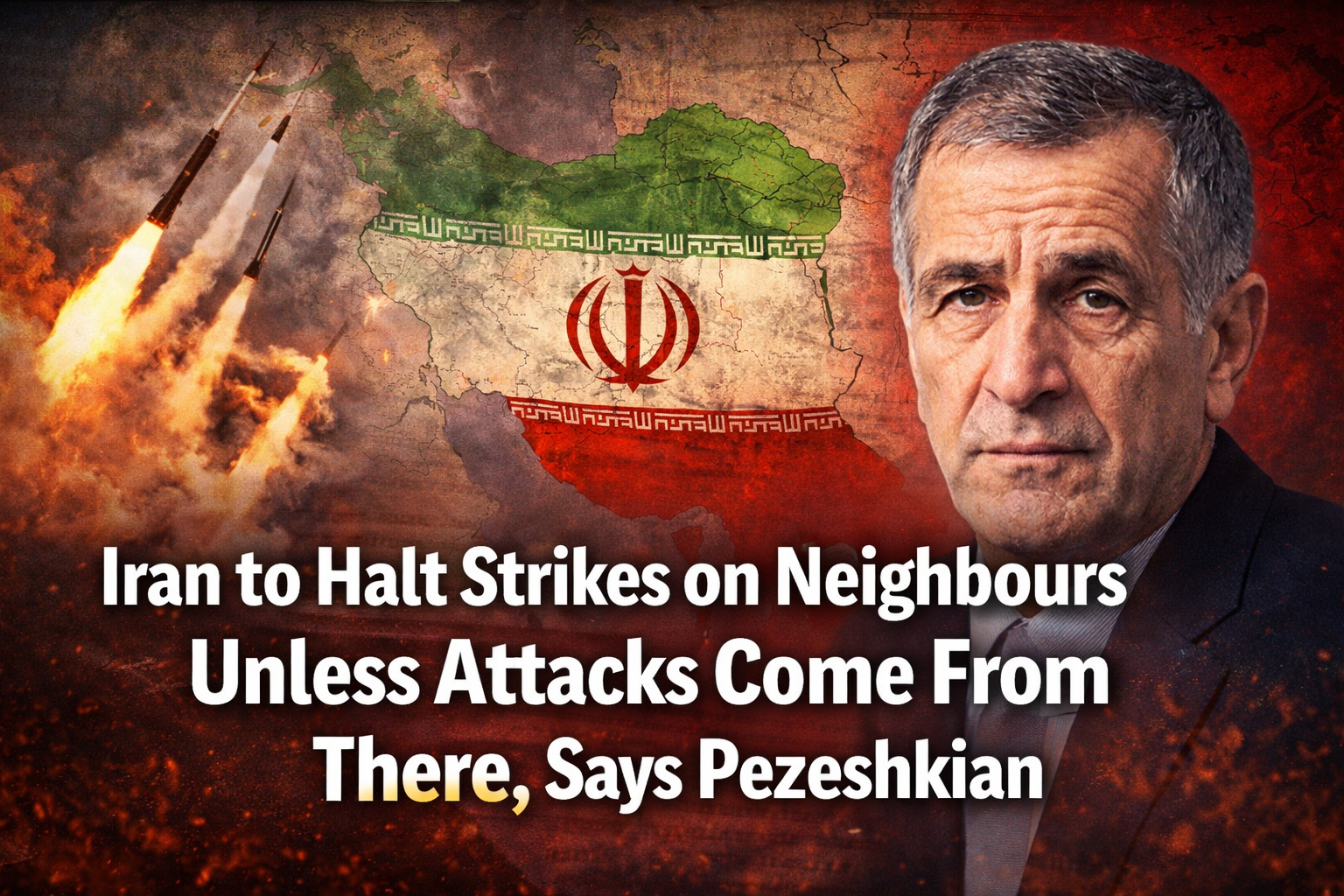
Iran to Halt Strikes on Neighbours Unless Attacks Come From There Says Pezeshkian
Iran has announced that it will halt missile and drone strikes on neighbouring countries unless attacks against Iran originate from those territories. The announcement was made by Iranian President Masoud Pezeshkian, who said the decision was aimed at reducing regional tensions as the conflict between Iran, Israel and the United States continues to escalate. The statement comes during the second week of the ongoing war in the Middle East, which began after coordinated United States and Israeli airstrikes targeted Iranian military infrastructure and leadership. The conflict has since expanded across several countries in the region, raising fears of a broader regional war.
Iran Signals a Change in Strategy
In a televised address and official statements, Pezeshkian emphasized that Iran respects the sovereignty of neighbouring states and does not intend to attack them directly. He said Iran’s leadership had approved a policy under which missile and drone strikes would stop unless attacks against Iran were launched from those countries. The Iranian president also issued an apology to Gulf nations that were previously affected by Iranian strikes during the conflict. The apology appeared to be an attempt to ease tensions with regional governments that host US military bases or maintain security partnerships with Washington. Despite the conciliatory message toward neighbouring states, Iranian leaders warned that US and Israeli military bases and interests across the region remain legitimate targets for retaliation as long as the war continues.
CLICK FOR MORE NEWS HERE
How the War Began
The current conflict began in late February when the United States and Israel launched coordinated military strikes targeting Iranian military facilities, air defence systems and missile infrastructure. The attacks were described by US and Israeli officials as necessary to weaken Iran’s military capabilities and reduce the threat posed by its missile and drone programs. Iranian officials condemned the strikes as an act of aggression and vowed to respond. In retaliation, Iran launched missiles and drones toward Israel and US military positions in several Middle Eastern countries, including Bahrain, Qatar, Saudi Arabia, Kuwait and the United Arab Emirates. These attacks significantly widened the conflict and raised fears that more countries could be drawn into the war.
Impact on Gulf Nations
Several Gulf states were directly affected by Iranian retaliatory strikes. Air defence systems in countries such as Saudi Arabia and the United Arab Emirates were activated to intercept incoming missiles and drones. In some cases debris from intercepted projectiles caused damage to buildings and infrastructure in major cities. Regional governments expressed concern that the war could destabilize the Middle East and threaten critical energy infrastructure. The Gulf region plays a crucial role in global energy supply with a large portion of the world’s oil and gas shipments passing through nearby maritime routes. Any escalation in the conflict could disrupt these shipments and cause global economic consequences. Because of these concerns several countries in the region have called for restraint and diplomatic solutions to prevent the conflict from spreading further.
Iran Rejects Calls for Surrender
While announcing the halt to strikes on neighbouring countries Pezeshkian also rejected demands from the United States for Iran to surrender. Iranian leaders said the country would continue defending itself and would not give in to foreign pressure. The president described calls for unconditional surrender as unrealistic and insisted that Iran would continue responding to military attacks. The conflict has already resulted in casualties and destruction in parts of the Middle East. Airstrikes and missile attacks have damaged military facilities infrastructure and residential areas in multiple countries. Analysts warn that continued escalation could further destabilize the region and trigger wider military involvement.
Regional and Global Concerns
The ongoing war has alarmed governments around the world with many urging immediate de-escalation and diplomatic negotiations. International organizations and several world powers have called for restraint from all sides. They have warned that the conflict could have serious humanitarian and economic consequences if it continues to intensify. In addition to civilian casualties the war has disrupted air travel shipping routes and energy markets across the region. Rising oil prices and concerns about supply disruptions have already begun affecting global markets. Experts say the Middle East conflict has the potential to reshape geopolitical alliances and security strategies if it continues.
What Happens Next
Iran’s decision to halt strikes on neighbouring countries may reduce tensions with Gulf states but the broader conflict with Israel and the United States remains unresolved. Military operations are continuing across several areas of the Middle East and both sides appear determined to pursue their strategic objectives. Observers say the coming days will be critical in determining whether diplomatic efforts can slow the escalation or whether the conflict will expand into an even larger regional war. For now the situation remains volatile as governments across the region prepare for the next phase of a conflict that has already transformed the Middle East’s security landscape.