


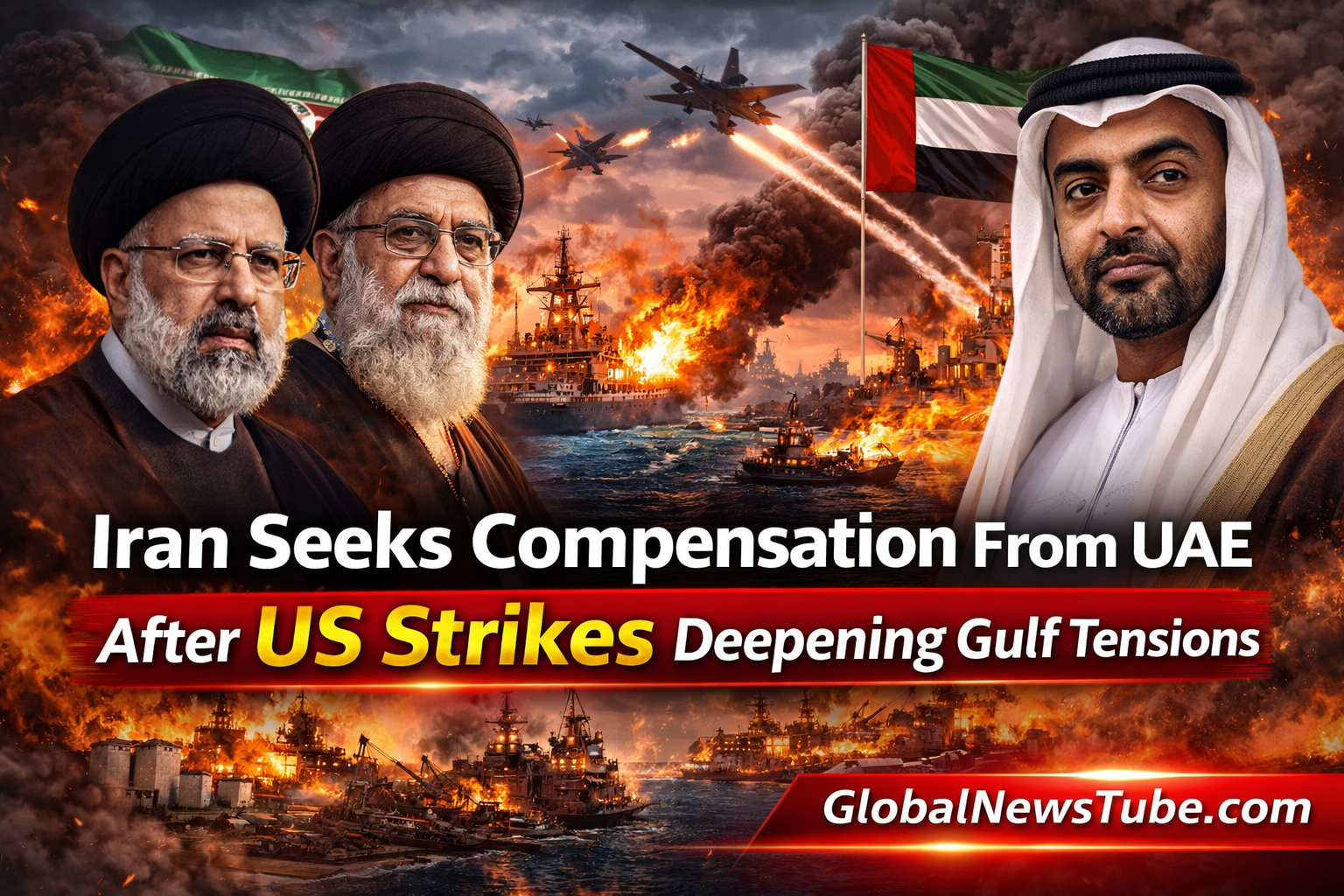
The latest dispute in the Gulf has added a new diplomatic and legal dimension to the wider Iran conflict. The core issue is now captured in one key phrase Iran seeks compensation from UAE. Iran’s UN ambassador has reportedly sent a letter demanding compensation from the United Arab Emirates, arguing that the UAE bears responsibility for damage caused by United States strikes allegedly launched from Emirati territory. This demand sharply raises the political stakes between Tehran and Abu Dhabi and signals that Iran is expanding its response beyond military retaliation into formal international claims.
This development matters because it shifts the confrontation from the battlefield to diplomacy, international law, and financial liability. If Iran continues pressing the claim, the dispute could intensify pressure on Gulf governments already trying to protect their economies, their security partnerships, and their regional standing. The phrase Iran seeks compensation from UAE is therefore not just a headline. It reflects a broader strategy by Tehran to impose costs on states it believes have enabled attacks against it.
Why Iran Seeks Compensation From UAE
Iran’s position appears to rest on the accusation that US military action against Iranian targets was conducted from or supported through Emirati territory. By raising the issue in an official letter, Tehran is presenting the matter as one of state responsibility and compensation.
From Iran’s perspective, this is a way to reframe the conflict. Instead of responding only through military means, it is also trying to create legal and diplomatic pressure on a Gulf state closely tied to Washington. By doing so, Iran may hope to deter future cooperation with US military operations or at least raise the political and financial costs of such cooperation.
That is why the keyword Iran seeks compensation from UAE captures more than a narrow legal complaint. It points to a broader contest over sovereignty, alliances, and accountability in the Gulf.
UAE Rejects Iranian Pressure
The UAE has already taken a hard line against Iranian attacks and accusations. Emirati officials have condemned Iranian strikes on their territory as a violation of sovereignty and international law. Abu Dhabi has made clear that it sees itself not as an enabler of aggression, but as a state facing direct threats from regional escalation.
That context makes it highly unlikely the UAE will accept Iran’s compensation claim. On the contrary, Emirati officials are expected to argue that Iran itself should be held responsible for attacks on civilian areas, strategic sites, and critical infrastructure within the UAE.
This creates a sharp diplomatic contradiction. Iran says the UAE should pay for damage linked to US strikes allegedly connected to Emirati territory, while the UAE says Iran itself has violated Emirati sovereignty through direct attacks and threats. As a result, the dispute is likely to deepen rather than be resolved quickly.
Gulf Sovereignty and International Law
The demand that Iran seeks compensation from UAE is significant because it invokes questions of sovereignty and indirect participation in war. If one state allows its territory to be used for attacks on another, the legal and political consequences can be serious, especially when military escalation affects civilians, infrastructure, or regional stability.
Iran appears to be trying to push this argument into the international arena, where it can frame the UAE not simply as a neighboring state but as a participant in a broader military campaign. Whether that claim gains legal or diplomatic traction remains uncertain, but it clearly shows that Tehran wants to broaden the conflict beyond military exchanges.
At the same time, the UAE and its partners are likely to counter that Iran’s own actions have undermined its legal standing. Missile threats, attacks on facilities, and pressure on Gulf states have created a climate in which many countries are more likely to view Iran as a source of instability rather than a victim entitled to compensation.
Economic and Strategic Stakes for the UAE
The phrase Iran seeks compensation from UAE also carries major economic implications. The UAE has worked hard to present itself as a stable center for finance, tourism, logistics, aviation, and energy security. Any suggestion that its territory played a role in military operations against Iran could increase investor anxiety and raise concerns about regional risk.
For Abu Dhabi, the challenge is not simply to reject Iran’s claim, but to do so without inviting even greater escalation. If tensions continue rising, the UAE could face additional pressure on shipping routes, insurance costs, business confidence, and strategic infrastructure.
This means the dispute cannot be seen in isolation. It is tied to the broader instability spreading across the Gulf, where governments are already trying to manage energy security, investor confidence, and regional diplomacy at the same time. A compensation dispute may sound legal on the surface, but in reality it is deeply connected to economics and national security.
What Iran May Be Trying to Achieve
Iran’s compensation demand may serve several strategic goals. First, it allows Tehran to put the UAE on the defensive diplomatically. Second, it sends a warning to other Gulf states that cooperation with US military action could bring not only security risks but also formal claims of liability. Third, it helps Iran shape the narrative by portraying itself as a state seeking legal remedy, even as military exchanges continue.
These goals fit a wider regional pattern in which diplomacy, economic pressure, and military escalation are unfolding at the same time. Iran is not relying on one single tool. Instead, it appears to be combining legal complaints, political messaging, and strategic pressure to widen the cost of the conflict for its rivals.
What Happens Next
The most likely next step is a continued exchange of accusations rather than any immediate legal resolution. Iran may continue raising the issue in international forums, while the UAE will probably keep emphasizing its own sovereignty and condemning Iranian actions.
Unless tensions ease, the compensation demand could become part of a wider campaign of diplomatic retaliation between Tehran and Gulf capitals. It may also influence how other Gulf states respond to pressure from both Washington and Tehran in the coming weeks.
Conclusion
The phrase Iran seeks compensation from UAE marks an important shift in the regional crisis. Iran is no longer relying only on retaliation and warnings. It is also trying to use diplomacy and legal argument to pressure a Gulf rival it believes enabled US military action.
The UAE, however, has already positioned itself as a victim of Iranian aggression and is unlikely to yield to Tehran’s demands. That means this dispute will probably deepen rather than disappear. In a region already shaken by war, damaged energy infrastructure, and rising insecurity, even a compensation claim can become another front in a much larger confrontation.