


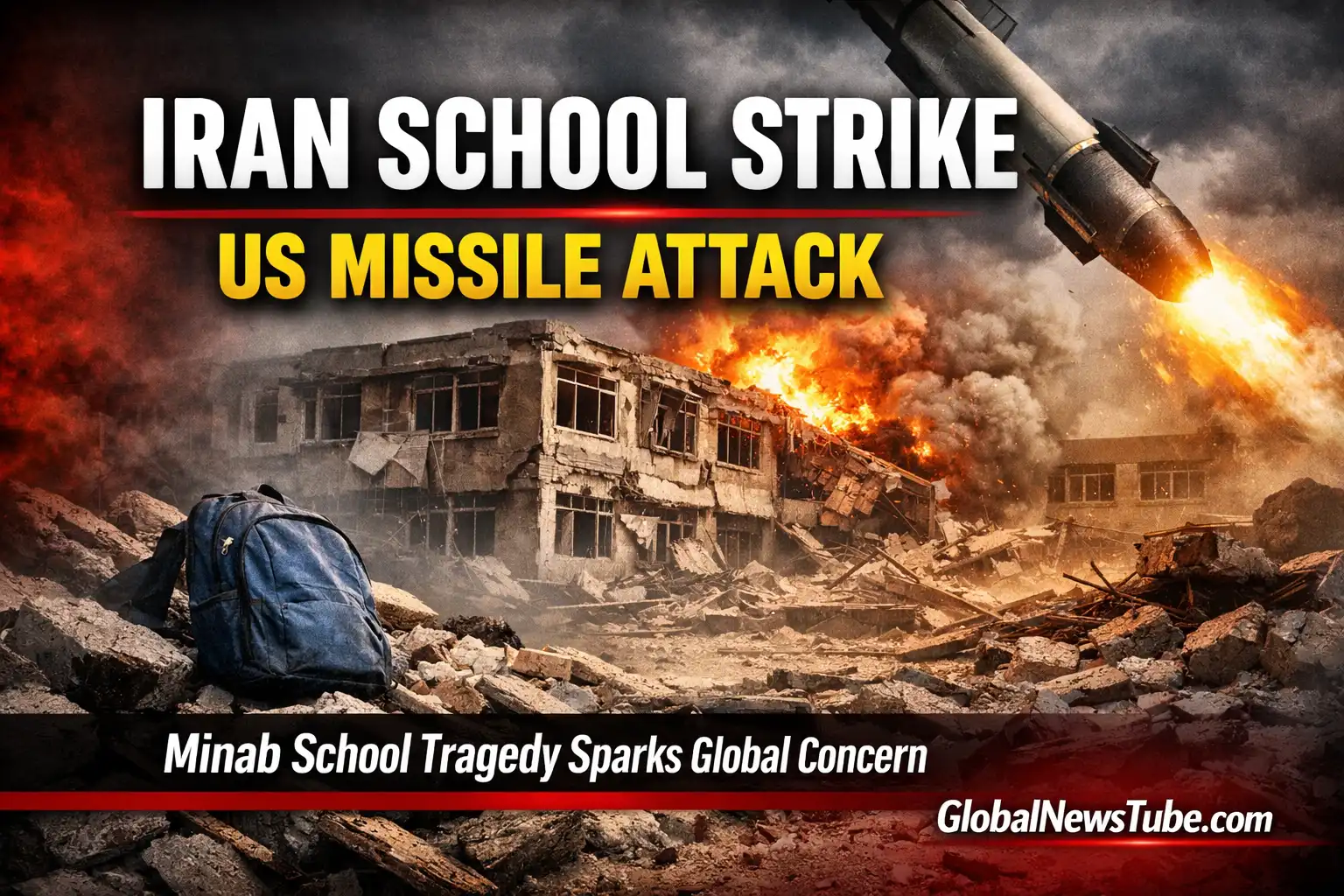
Iran School Strike US Missile Deadly Attack on Minab School Raises Global Concern
The Iran school strike US missile incident has become one of the most tragic and controversial events in the ongoing Iran war. A missile strike hit a primary school in the southern Iranian city of Minab during a wave of airstrikes targeting Iranian military facilities. The attack resulted in heavy casualties, many of them schoolchildren, and sparked global outrage.
International organizations, governments, and human rights groups have called for a full investigation into the strike. The incident highlights the devastating impact of the Iran conflict on civilians and has raised serious questions about the targeting of military sites located near civilian infrastructure.
The tragedy has intensified international debate about the legality of military operations and the protection of civilians during wartime.
Background of the Iran School Strike US Missile Incident
Escalation of the Iran War
The Iran school strike US missile incident occurred during a broader military campaign launched by the United States and Israel against Iranian military facilities. The strikes targeted bases, command centers, and strategic infrastructure across the country.
During the opening wave of attacks, missiles struck multiple locations in the southern Iranian province of Hormozgan, including areas near Minab. The strikes were part of a larger operation aimed at weakening Iran’s military capabilities.
However, the conflict quickly resulted in civilian casualties, drawing international attention to the humanitarian consequences of the war.
Location of the Minab School
The missile strike hit a girls’ primary school in Minab during the morning hours when students were attending classes. The school building suffered severe damage, with parts of the structure collapsing after the explosion.
Authorities reported that the missile struck the school during school hours when students were changing classes. The blast destroyed a large section of the building and trapped many victims under the rubble.
Iran School Strike US Missile Casualties
Death Toll and Injuries
The Iran school strike US missile attack resulted in a devastating loss of life. Iranian officials reported that more than 160 people were killed and dozens were injured in the strike.
Most of the victims were schoolchildren between the ages of seven and twelve. Teachers, school staff, and several parents were also among those killed in the explosion.
The strike is considered one of the deadliest civilian incidents of the ongoing war.
Damage to the School
Images from the aftermath show extensive destruction inside the school compound. The explosion destroyed a large portion of the building and caused its roof to collapse.
Rescue teams and emergency workers spent hours searching through debris to recover survivors and victims. Many families gathered outside hospitals and morgues as authorities worked to identify those killed in the strike.
Investigation into the Iran School Strike US Missile
Questions About Responsibility
The Iran school strike US missile incident has led to conflicting claims about who was responsible for the attack. Iranian officials blamed the United States and Israel for the missile strike, while US officials initially denied targeting civilian sites.
The government has stated that the incident is under investigation and that military operations were aimed at strategic targets.
Evidence from Video and Satellite Images
Satellite images and video footage from the attack site have helped investigators analyze what happened during the strike. Experts studying the damage patterns believe that the school was directly hit rather than damaged by nearby explosions.
Reports also indicate that a nearby military facility may have been one of the intended targets during the strikes.
The proximity of military infrastructure to the school has raised concerns about the risks faced by civilians living near strategic sites.
International Reaction to the Iran School Strike US Missile
Condemnation from Human Rights Groups
Human rights organizations have strongly condemned the attack. International experts have described the strike on a school as a serious violation of international humanitarian law.
United Nations officials expressed shock over the incident and called for an independent investigation into the deaths of many schoolchildren.
The UN emphasized that schools are protected civilian institutions and must not be targeted during armed conflicts.
Calls for Accountability
Several governments and international organizations have demanded accountability for the attack. Human rights groups argue that any military operation that harms civilians must be thoroughly investigated.
They also stress that international law requires armed forces to distinguish between military targets and civilian infrastructure.
Impact of the Iran School Strike on the War
Growing Humanitarian Crisis
The Iran school strike US missile tragedy has highlighted the growing humanitarian crisis resulting from the war. Civilian casualties, damaged infrastructure, and displacement are increasing as the conflict continues.
Hospitals and emergency services in several regions are struggling to manage the rising number of injured civilians.
Risk of Escalation
The attack has also increased tensions between Iran and its adversaries. Iranian leaders have vowed to respond to the strike, raising fears of further escalation.
Analysts warn that continued attacks on civilian areas could intensify the conflict and increase international pressure for a ceasefire.
Conclusion
The Iran school strike US missile incident represents one of the most tragic moments of the ongoing Iran conflict. The missile strike on a school in Minab caused devastating civilian casualties and sparked global condemnation.
As investigations continue, the incident has become a powerful reminder of the dangers civilians face during wartime. Protecting schools, hospitals, and other civilian institutions remains a key principle of international humanitarian law.
The outcome of the investigation and the broader war will determine whether accountability and diplomatic solutions can help prevent similar tragedies in the future.