


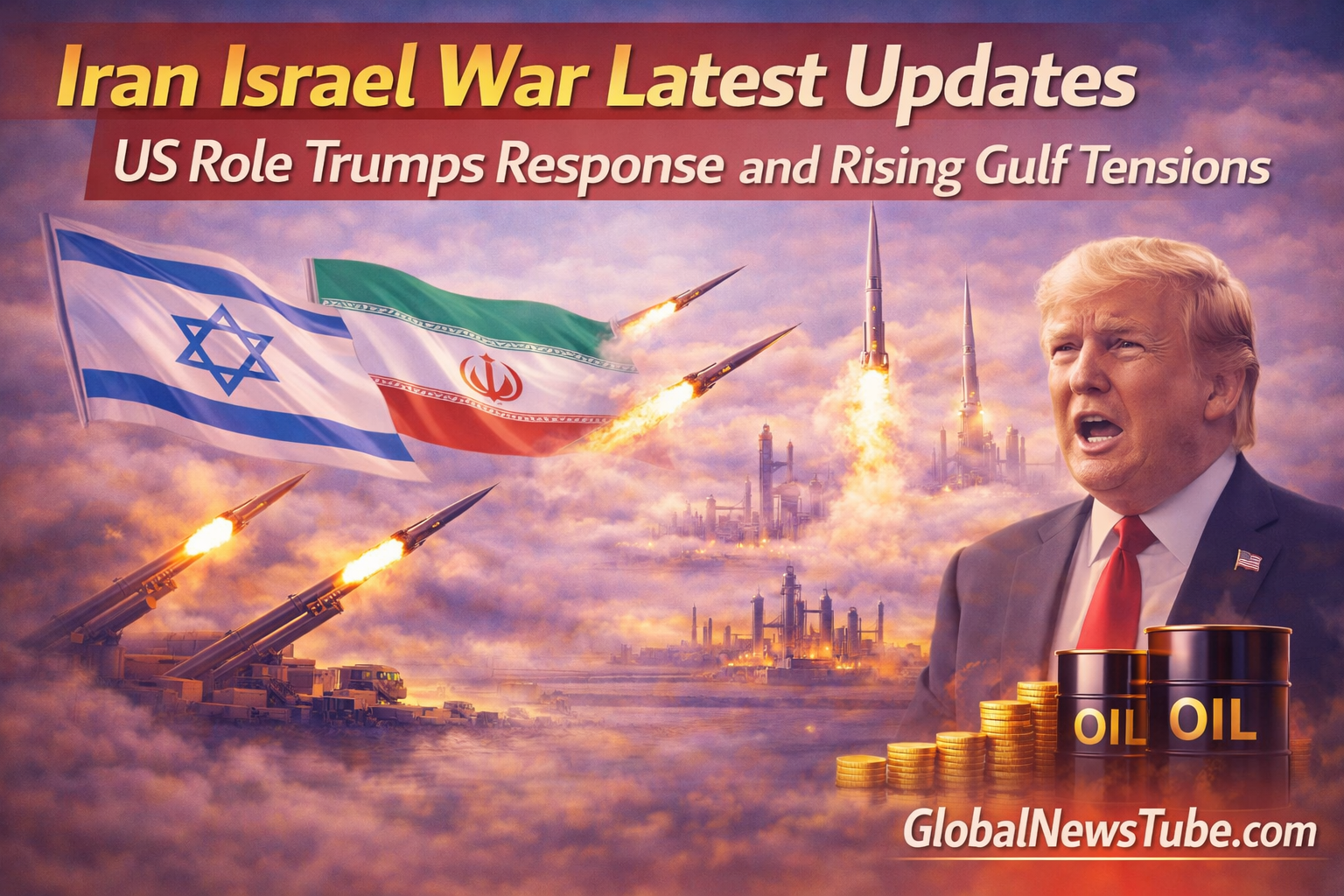
Iran Israel War Latest Updates US Role Trumps Response and Rising Gulf Tensions
The Iran Israel war latest updates show a rapidly expanding regional crisis with major consequences for the Middle East, global energy markets, and international diplomacy. What began as a direct military confrontation has now widened into a broader conflict involving the United States, Gulf states, and high level political pressure from President Donald Trump. Recent developments indicate intensifying missile and drone attacks, mounting casualties, and rising fears that the war could destabilize the wider region for weeks to come.
One of the biggest reasons this conflict matters globally is the direct US role. Reports suggest that hundreds of American troops have been affected by the fighting, with several seriously injured, showing that the US Iran conflict is no longer limited to diplomacy or indirect military support. The scale of these developments has made the war more politically sensitive in Washington and has increased scrutiny over how deeply the United States may become involved if the fighting continues.
At the same time, President Trump has remained central to the political narrative. His response has combined military pressure with broader strategic messaging, including concern over the Strait of Hormuz, allied cooperation, and the economic impact of prolonged conflict. This has made the crisis one of the defining foreign policy challenges of the moment.
Why the Iran Israel War Matters So Much
The Iran Israel war latest updates matter because this is no longer a contained bilateral confrontation. The war now affects Gulf airspace, oil infrastructure, shipping routes, and US military personnel stationed across the region. As missile and drone threats spread beyond Iran and Israel, nearby countries are being forced to react with new security measures and emergency planning.
This widening conflict raises the risk of a broader regional breakdown. Gulf countries are deeply concerned that attacks on ports, oil sites or military assets could disrupt both economic activity and civilian life. Even where immediate damage is limited, the fear of escalation alone is enough to trigger market instability, flight disruptions, and increasing military preparedness.
Trump Iran War Strategy Under Pressure
The phrase Trump Iran war has become a major political issue because Trumps statements are shaping both domestic and international reactions. On one hand, he has projected strength and pressure against Iran. On the other, he appears to be trying to manage the economic and diplomatic fallout, especially around global oil routes and the role of allies in the region.
This balancing act is difficult. If the war continues for a longer period, Trump could face criticism from both sides. Some will argue for tougher military action against Iran, while others will warn against deeper US involvement in another prolonged Middle East conflict. That political tension makes every new development important.
Rising Pressure on Gulf Security
Another reason the Middle East war 2026 is drawing worldwide attention is the pressure it is placing on Gulf security. Iranian missile and drone threats are reaching areas close to major commercial and energy centers, creating new concerns about the safety of airspace, shipping routes, and critical infrastructure.
This matters because the Gulf is one of the worlds most important regions for oil exports and trade flows. Any conflict that threatens ports, airspace, or energy infrastructure can have an immediate effect on prices and investor confidence. Businesses, governments, and consumers across the world are watching closely because disruptions in the Gulf rarely remain local for long.
Human Cost of the Conflict
While military and political developments dominate the headlines, the human cost of the war is also rising. US troop casualties are one major indicator, but the broader regional toll is also severe. Deaths, injuries, and damage are being reported across multiple countries touched by the conflict. This includes military personnel, civilians near targeted areas, and communities living under the fear of repeated missile and drone attacks.
When wars expand geographically, the consequences become harder to control. Civilian infrastructure comes under pressure, emergency systems are tested, and the possibility of miscalculation grows. That is why many analysts are now treating the conflict not as a short term crisis, but as a prolonged regional emergency.
Impact on Oil and the Global Economy
The Iran US Israel tensions are also becoming a major economic story. Markets are reacting not only to actual damage, but also to fear about what could happen next. If the Strait of Hormuz faces deeper disruption, oil prices could rise sharply. If Gulf airspace or transport networks remain under threat, trade costs could also increase.
For importing countries, that could mean higher fuel costs, inflation pressure, and uncertainty for industries that rely on stable shipping. For investors, it creates a risk premium that spreads far beyond the Middle East. Even without a full shutdown of supply routes, continued instability is enough to unsettle global markets.
What Could Happen Next
The next phase of the Iran Israel war latest updates will depend on three things whether attacks continue spreading across the Gulf, whether the United States expands its military role, and whether diplomacy can reopen in a meaningful way. Although military escalation continues to dominate the headlines, there are also signs that communication channels may still exist behind the scenes.
Still, the broader picture remains unstable. Iran’s power structure appears to remain intact, and the conflict is showing few signs of ending quickly. That reduces hopes for a rapid resolution and increases the likelihood that the war could continue shaping regional politics and security for some time.
Conclusion
The Iran Israel war latest updates show a conflict that is no longer limited to two countries. It now involves the United States, threatens Gulf stability, affects global energy markets, and places major political pressure on President Trump.
As missile and drone attacks continue and casualties rise, the risk of a deeper regional war remains real. For now, the world is watching not just for the next strike, but for signs of whether this conflict can still be contained. Until that happens, it will remain one of the most serious geopolitical crises of 2026.