


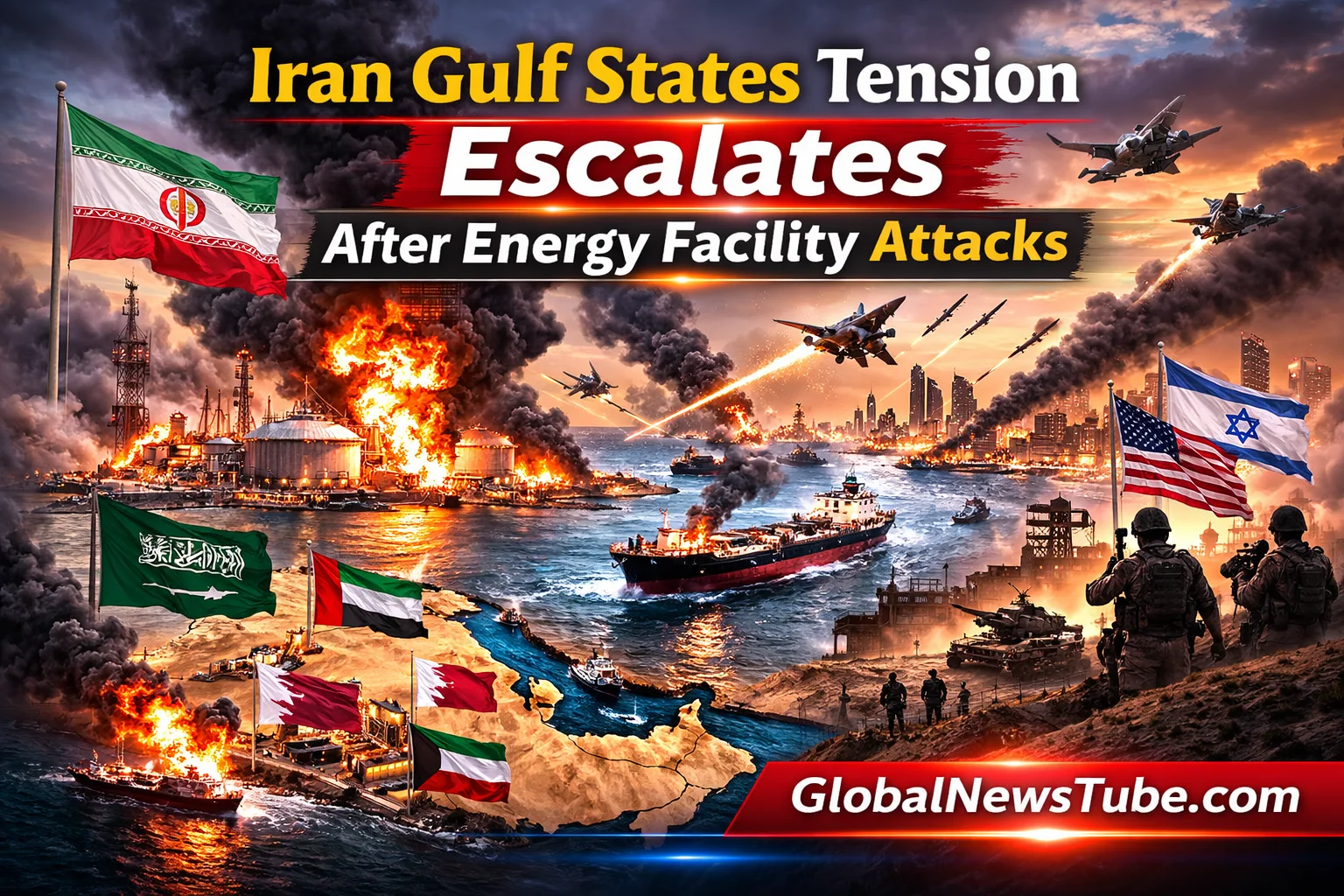
The latest surge in Iran Gulf states tension is pushing the Middle East into a more dangerous and unpredictable phase. A fresh wave of attacks on energy infrastructure in Qatar, the United Arab Emirates, and Saudi Arabia has deepened fears that a broader regional conflict may be taking shape. After an Israeli strike on Iran South Pars gasfield, Iran responded by increasing pressure on Gulf countries, sharply raising the risk of military escalation and economic disruption across the region.
Why Iran Gulf States Tension Is Rising
The immediate trigger for the latest crisis appears to be the Israeli strike on Iran’s South Pars gasfield, one of the most important energy assets in the region. The conflict has expanded beyond direct confrontation with Israel and now places the Gulf monarchies under severe strategic pressure. Instead of remaining on the sidelines, countries such as Qatar, Saudi Arabia, and the UAE are being forced to decide whether diplomacy is enough or whether a stronger deterrent posture is needed.
This shift is significant because it broadens the conflict into the Gulf, a region central to global oil and gas flows. Any instability here has consequences not only for regional politics but also for international trade and energy markets.
Qatar LNG Attack Raises Global Energy Concerns
One of the most serious developments in this new chapter of Iran Gulf states tension was the strike on Qatar’s Ras Laffan gas complex. The ballistic missile attack reportedly caused several fires and extensive damage, though the fires were later brought under control and no injuries were reported. In response, Qatar expelled Iranian security and military officials, declaring them persona non grata and describing the strike as a direct threat to national security.
This is highly significant because Qatar is one of the world’s top exporters of liquefied natural gas. Any disruption at Ras Laffan can affect global gas markets, shipping routes, and energy prices. Even a limited strike on such a facility is enough to alarm traders and governments worldwide.
Energy markets are extremely sensitive to geopolitical shocks in the Gulf. Attacks on major export infrastructure can quickly create fears about supply shortages, higher shipping costs, and prolonged instability in one of the world’s most vital energy corridors. That is why the Iran Qatar LNG attack is being watched far beyond the Middle East.
Saudi Arabia and UAE Face Growing Pressure
The UAE has also faced growing pressure after incidents at key gas and oil facilities linked to falling debris from intercepted missiles. Saudi Arabia, meanwhile, reported intercepting ballistic missiles aimed at Riyadh and stopping a drone attack targeting a gas installation in the eastern part of the country.
These incidents show that Iran Saudi UAE tensions are no longer limited to political messaging or proxy conflicts. They are increasingly tied to direct threats against critical infrastructure. For Gulf governments, that creates a difficult balancing act. They must defend their territory and reassure global investors, while also avoiding steps that could trigger a much broader military confrontation.
For Saudi Arabia and the UAE, the challenge is not only military but economic. Both countries have invested heavily in presenting themselves as stable centers for business, tourism, and energy security. Repeated attacks on strategic infrastructure threaten that image and may increase pressure for a firmer regional response.
Will Gulf States Strike Back
A key question now is whether Gulf states will respond militarily. Saudi officials have signaled that they reserve the right to take action if necessary, while also warning that regional patience is not unlimited. At the same time, Gulf leaders remain cautious because they understand the cost of becoming more deeply involved in a prolonged war.
This is where the crisis becomes especially complex. The Gulf states maintain strong security partnerships with the United States, but they also live in close proximity to Iran and understand the lasting consequences of open conflict. A show of force may appear necessary in the short term, but escalation could severely damage trade, infrastructure, and domestic stability.
In that sense, Iran Gulf states tension is not only about retaliation. It is also about whether regional governments believe they can manage a prolonged military crisis without suffering long term economic and political damage.
Diplomacy Is Under Severe Strain
Diplomacy across the Gulf has come under serious strain. Qatar has long presented itself as a mediator and supporter of dialogue, yet direct attacks on its infrastructure make that role much harder to maintain. Across the region, Gulf governments are facing a diplomatic dilemma they may feel pressure to respond strongly, but they are equally aware of the dangers of deeper involvement in war.
This tension reflects the wider regional mood. Publicly, leaders still support diplomacy and de escalation. In practice, however, each new strike narrows the space for negotiation. When energy facilities and major cities come under threat, governments must show they are capable of protecting national interests.
What This Means for the Middle East
The broader impact of this Middle East energy crisis could be far reaching. If attacks continue, the region may see tighter security around oil and gas infrastructure, higher insurance premiums for shipping, and stronger calls for a coordinated Gulf security strategy. Global energy prices could also become more volatile if markets begin to fear sustained disruption.
For now, the clearest conclusion is that Iran Gulf states tension has entered a more dangerous phase. The conflict is no longer confined to warnings, diplomatic statements, or indirect rivalry. It is now affecting the energy arteries that connect Gulf stability to the wider global economy.
As long as attacks on strategic infrastructure continue, the risks of military retaliation, diplomatic rupture, and economic disruption will remain high. The coming days will be critical in determining whether the region moves toward containment or slides into a wider and more destructive confrontation.