


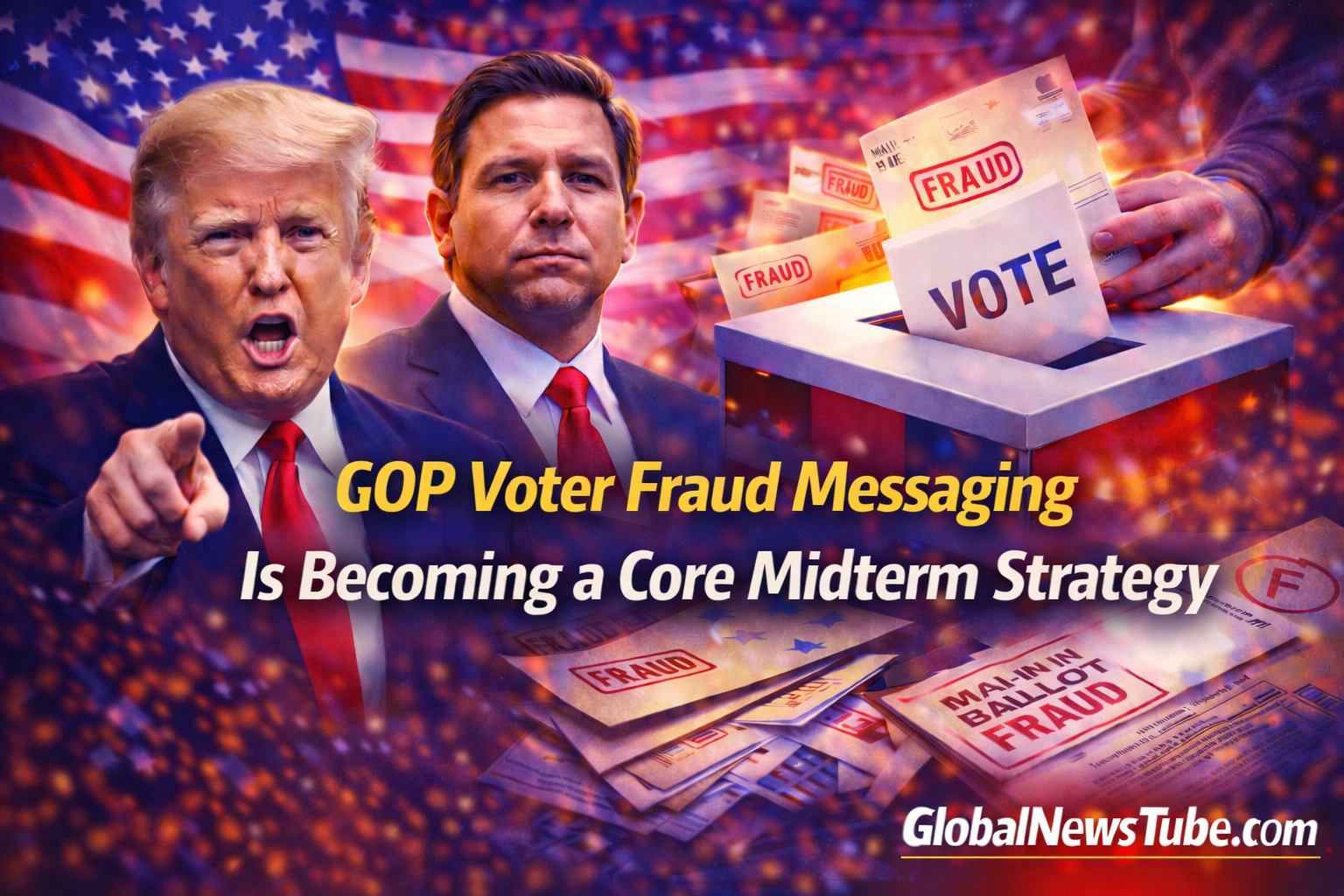
Why GOP Voter Fraud Messaging Matters in 2026
GOP voter fraud messaging is becoming a defining part of the Republican playbook for the 2026 midterm cycle. The issue matters because it sits at the intersection of campaign strategy, election law, voter trust, and turnout. As Republicans look for themes that energize their base, election integrity has remained one of the most reliable and emotionally powerful messages in Donald Trump’s political movement. That makes it more than a policy debate. It is also a political identity marker.
The broader context is clear. Republicans in Congress have advanced stricter voting proposals such as the SAVE America Act, which would require documentary proof of citizenship to register to vote. Supporters say these measures protect elections, while critics argue they respond to a problem that evidence shows is rare and could make voting harder for eligible citizens. The political effect, however, is unmistakable voter fraud claims remain central to Republican messaging heading into the midterms.
How Trump Voter Fraud Messaging Shapes the Party
Trump voter fraud messaging still has unusual power inside the Republican Party because it connects to a long running narrative that elections are vulnerable, institutions are untrustworthy, and aggressive action is needed to protect the vote. Trump has repeatedly pushed this theme in public statements and legislative pressure, including support for federal voting restrictions and criticism of mail voting. Senate Republicans have been forced to respond to that pressure even when some of them are uneasy about the legislative tactics being demanded.
Why Republican Midterm Messaging Keeps Returning to Election Integrity
Republican midterm messaging keeps returning to election integrity because it solves several political problems at once. First, it unifies different wings of the party. Traditional conservatives may focus on rules and legitimacy, while Trump aligned voters often respond to a stronger narrative about stolen trust and institutional bias. Election integrity language can speak to both groups without always using the same tone.
Second, it gives Republicans a forward looking campaign issue even when they already hold significant power. Midterms are often difficult for the president’s party, and under those conditions, a party needs issues that motivate supporters beyond a simple defense of the status quo. Election security messaging helps do that by presenting the next election as something that must be actively protected.
Third, voter fraud claims can be connected to broader Republican arguments about borders, citizenship, and federal authority. That makes the issue politically useful beyond election administration itself. It can be woven into a larger story about national control, legal identity, and distrust of Democratic governance.
The SAVE Act and the Policy Side of GOP Voter Fraud Messaging
The SAVE America Act is one of the clearest examples of how GOP voter fraud messaging is being translated into concrete policy. The House passed the bill, and it would require documentary proof of citizenship and photo identification before a person could register to vote in federal elections. Supporters say that is common sense protection. Opponents say it could disenfranchise many eligible voters who do not have quick access to the required documents.
This matters because messaging is most powerful when it is attached to a visible legislative demand. The bill gives Republican candidates something tangible to point to. They can say they are not only warning about risk, but also offering a solution. Whether the bill becomes law is almost secondary from a campaign standpoint. Its existence reinforces the party’s preferred frame elections are vulnerable, Democrats are not serious enough about safeguards, and Republicans are the side trying to fix it.
The Problem With Voter Fraud Claims
The weakness in this strategy is that widespread voter fraud remains unsupported by strong evidence. Studies and past reviews have not found broad fraud on the scale often implied in political rhetoric. That gap between rhetoric and evidence is crucial. It means the power of GOP voter fraud messaging comes less from documented frequency and more from political resonance.
It works because election integrity is easy to present as a basic democratic value, even when the specific warnings behind it are disputed or exaggerated. For many voters, the phrase protect the vote sounds reasonable before they examine what policies are being proposed or what evidence supports them. That makes the language politically effective even when the underlying claims are controversial.
How Democrats and States Are Responding
Democrats and election officials are not treating this messaging as harmless campaign talk. Some Democratic led states are moving to protect polling places, election records, and voters from possible intimidation or federal overreach. That reflects broader concern about how election enforcement could be used in a highly polarized atmosphere.
That response shows how Trump voter fraud messaging is influencing the entire political system. It does not just mobilize Republican voters. It also prompts legal preparation, defensive legislation, and a stronger emphasis on institutional independence among Democratic officials. In other words, the messaging itself becomes part of the election environment.
Why GOP Voter Fraud Messaging Could Be Effective
GOP voter fraud messaging could be effective in 2026 because it combines fear, procedural language, and partisan loyalty in a single package. It is emotionally potent without always sounding extreme. Words like integrity, security, citizenship, and verification are powerful campaign terms. They sound administrative, but they carry major symbolic weight.
For Republican candidates, the benefit is obvious. They can use the issue to excite core voters, pressure rivals in primaries, and keep Trump aligned supporters engaged. For Trump himself, the issue preserves one of the defining themes of his political brand the idea that the system cannot be trusted unless his movement is actively policing it.
Conclusion
GOP voter fraud messaging is not just another talking point in the 2026 midterms. It is becoming a central strategic frame for how Republicans talk about democracy, citizenship, and political power. The push for measures like the SAVE America Act, the continued influence of Trump’s election rhetoric, and the sharp responses from Democratic led states all show that this issue is shaping more than campaign speeches. It is shaping policy fights and public trust as well.
The biggest takeaway is simple. Even without strong evidence of widespread voter fraud, the message remains politically valuable. That is why GOP voter fraud messaging is likely to remain one of the most important themes to watch as the 2026 midterm elections approach.