


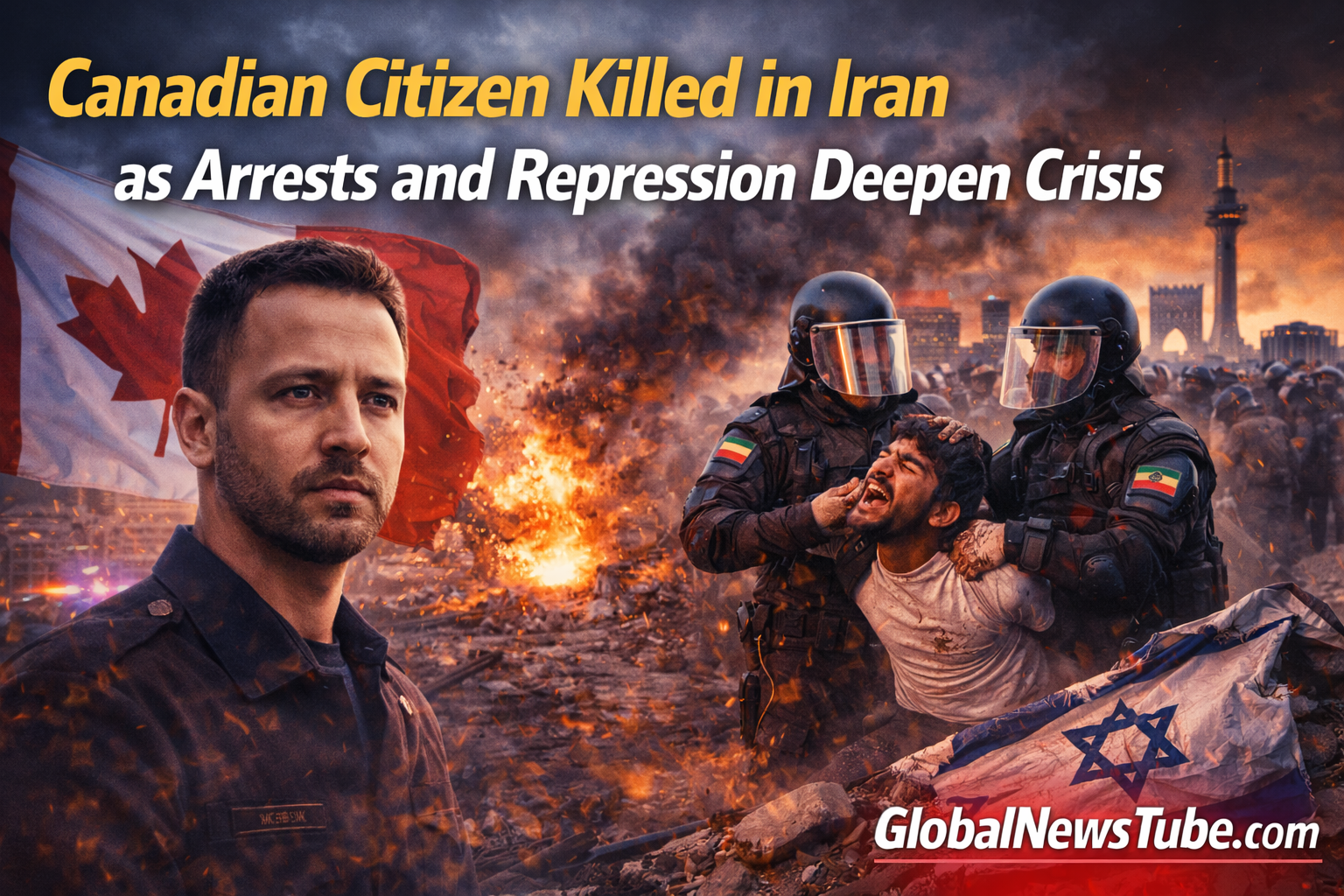
Canadian Citizen Killed in Iran as Arrests and Repression Deepen Crisis
The death of a Canadian citizen in Iran has pushed Canada’s relationship with Tehran back into sharp focus. As reports of arbitrary arrests, disappearances, and deadly repression continue to emerge from Iran, Canadian officials are facing growing pressure to respond more forcefully. The issue is no longer only about diplomacy. It is also about human rights, diaspora safety, and whether Canada can protect people tied to a country where political dissent has become increasingly dangerous.
This story matters because it captures two connected realities at once. Inside Iran, rights groups and international reporting describe a sweeping crackdown marked by mass arrests, disappearances, and killings. Outside Iran, diaspora communities in countries like Canada say they are increasingly worried about intimidation, surveillance, and violence linked to Tehran’s reach beyond its borders. Canada now finds itself caught between condemning abuses abroad and dealing with fears that the same repression can touch people on Canadian soil.
Why the Death of a Canadian Citizen in Iran Matters
When a Canadian citizen is killed in Iran during a period of unrest, the event carries both moral and political weight. It signals that the crisis is not confined within Iran’s borders and that foreign nationals or dual nationals may also be at risk. Canadian officials have made clear that Ottawa views the death as part of a broader pattern of state violence against peaceful protesters and civilians. This is not just a diplomatic concern. It is a personal tragedy with national implications.
The phrase Canadian citizen killed in Iran is powerful because it speaks to both urgency and accountability. It raises questions about what happened, who is responsible, and how Canada should respond. For many readers, it also becomes an entry point into a much larger issue the intensifying repression inside Iran and the growing vulnerability of people connected to the country, whether they live there or abroad.
Iran’s Crackdown Has Been Marked by Arrests and Fear
Human rights organizations have described the aftermath of Iran’s recent protest wave as a campaign of mass arbitrary detentions, enforced disappearances, and widespread intimidation. Reports suggest that Iranian authorities have used arrests, violence, and fear to silence dissent and prevent the public from challenging the state. Families of victims, activists, and ordinary civilians have all been affected.
This matters because readers searching for information about a Canadian citizen killed in Iran are usually also looking for the broader context. Deaths in times of political unrest rarely happen in isolation. They are often linked to a system of repression in which arrests, secret detention, violence, and information control all work together. That broader context makes the Canadian case even more alarming.
Canada’s Response Has Moved Beyond Statements
Canada has tried to frame its response as more than symbolic condemnation. Ottawa has introduced sanctions on individuals linked to Iranian state bodies accused of intimidation, violence, and transnational repression. Officials have said they are acting against Iran’s use of repression both inside Iran and beyond its borders.
These measures matter because they show Canada sees the problem as extending past Iran’s internal politics. The government has made it clear that abuses tied to Tehran are not just a foreign policy issue. They are increasingly viewed as a domestic security concern as well, especially when members of the Iranian diaspora in Canada say they feel threatened.
Iranian Communities in Canada Are Also Feeling the Pressure
The fear is not only theoretical. Members of the Iranian community in Canada have expressed growing concern about intimidation, surveillance, and the possible reach of Tehran’s tactics beyond its own borders. Cases involving activists and dissidents have intensified anxiety and pushed the issue further into the public eye.
This concern fits a wider pattern. Reports and warnings over recent years have suggested that critics of the Iranian government living abroad may face threats, harassment, or pressure. That is why the death of a Canadian citizen in Iran resonates so strongly in Canada. Many people now see the line between repression inside Iran and intimidation abroad as increasingly thin.
Why This Story Resonates in Canada
Canada is home to a large Iranian diaspora, and that means developments in Iran often have an immediate emotional and political impact across Canadian cities. Families worry about relatives back home. Activists fear retaliation. Lawmakers face pressure to turn sympathy into policy. The issue also connects to larger debates about foreign interference, targeted intimidation, and the responsibility of democratic states to protect dissidents living within their borders.
For many Canadians, this story is about more than one tragic death. It is about what kind of response is required when a foreign state is accused of repression that affects both its own population and communities abroad. The demand for accountability becomes stronger when people believe that silence will only encourage more abuse.
The Human Rights Dimension Cannot Be Ignored
At its core, this story is also about human rights. Arrests without due process, disappearances, violent repression, and intimidation of families are not isolated problems. They point to a deeper system in which dissent is treated as a threat to be crushed rather than a voice to be heard. That is why international attention has remained focused on Iran’s treatment of protesters and critics.
The death of a Canadian citizen within that environment is especially disturbing because it highlights the risks facing individuals caught in such a system. It also raises difficult questions for governments that must decide how strongly to respond when their citizens are harmed abroad.
What Happens Next
The big question is whether Canada will go further. Sanctions send a message, but they do not automatically create accountability. Families want answers, diaspora communities want protection, and human rights advocates want sustained pressure on Tehran. As long as reports of arbitrary arrests and intimidation continue, Canada will likely face demands to strengthen both its foreign policy response and its domestic safeguards against transnational repression.
Canada may also be pushed to coordinate more closely with allies on both sanctions and protective measures for vulnerable communities. The pressure to act will not come only from diplomats. It will come from civil society, activists, and ordinary people who believe that the cost of inaction is too high.
Conclusion
The death of a Canadian citizen in Iran has become a defining symbol of a broader crisis. It highlights the brutality of Iran’s crackdown, the danger posed by arbitrary arrests and repression, and the fear now felt by many Iranian communities in Canada. Canada has responded with condemnation and sanctions, but the pressure for stronger action is growing.
In that sense, the story is about far more than one tragedy. It is about whether democratic governments can confront repression that begins abroad but does not stop at the border. It is also about whether the international community is willing to stand firmly for accountability, justice, and the protection of those at risk.