


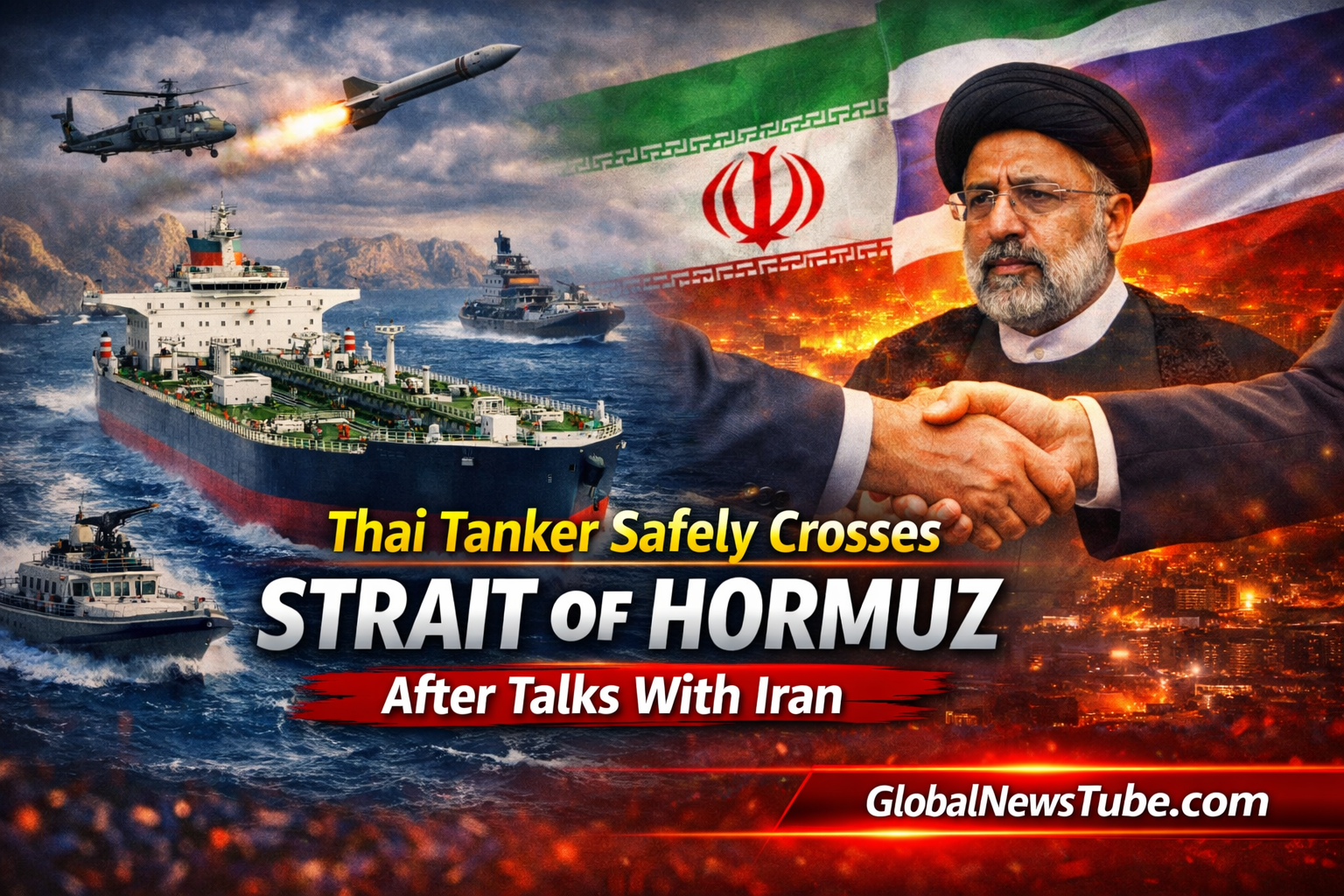
Diplomatic Breakthrough Eases Tensions
A Thai tanker safe passage through the Strait of Hormuz after talks with Iran has drawn global attention to the fragile state of one of the worlds most critical energy chokepoints. According to Reuters reporting published on March 25, 2026, the vessel crossed the waterway safely after diplomatic coordination between Thailand and Iran, and Thai officials said no payment was required to secure that transit.
The development matters far beyond Thailand. The Strait of Hormuz handles a major share of global oil shipments, making any disruption there a direct concern for energy importing countries, shipping firms, and financial markets. The Thai tanker Strait of Hormuz story is not just about one vessel moving through contested waters. It reflects a larger struggle over maritime access, diplomatic leverage, and the growing vulnerability of global trade routes during regional conflict.
Why the Strait of Hormuz Matters So Much
The Strait of Hormuz connects the Persian Gulf to the Gulf of Oman and the Arabian Sea. It is one of the most strategically important shipping corridors in the world because oil and gas exports from Gulf producers pass through it on the way to Asia, Europe, and beyond. When tensions rise in the strait, the effects ripple through freight costs, insurance premiums, fuel prices, and geopolitical risk calculations.
Recent weeks have shown exactly how quickly those risks can escalate. Multiple reports have described a sharply deteriorating maritime security environment around the strait, including attacks on commercial shipping and heavy restrictions linked to the conflict involving Iran. Earlier reporting this month also suggested that major energy importing countries were seeking assurances for safe passage as shipping in the area became severely constrained.
That broader backdrop is what makes the Thailand Iran tanker passage especially significant. Safe transit for a Thai vessel suggests that diplomatic channels still matter, even in a period of severe regional instability.
How Thailand Secured Safe Passage
According to reporting on the March 25 transit, the tanker owned by Bangchak Corporation crossed the strategic waterway after successful talks involving Thailands foreign minister and Irans ambassador to Thailand. Thai officials and the company said the tanker was not required to pay any fee to move through the strait.
This point is important because speculation had grown around whether ships would need special arrangements, political guarantees, or financial concessions to navigate the area safely. By emphasizing that no payment was made, Thai authorities appear to be signaling that the passage resulted from diplomacy rather than coercion or transactional bargaining. That distinction matters for both market confidence and international maritime norms.
The Thai case may also serve as a model for other countries seeking to protect merchant fleets without escalating military tensions. Instead of relying only on naval deterrence, Bangkok used direct state to state communication. In an increasingly dangerous maritime environment, that approach may prove attractive to governments that want to reduce risk while avoiding a broader strategic confrontation.
Irans Role in the Shipping Crisis
Iran has become central to the Strait of Hormuz shipping crisis. Recent developments indicate Tehran has allowed passage to some non hostile ships while restricting or threatening others linked to adversaries. This selective approach gives Iran considerable leverage over maritime traffic and sends a message that access to the strait can become a political instrument during wartime conditions.
That same pressure has already affected Asian shipping. Earlier in March, a Thai flagged vessel reportedly came under attack near the Strait of Hormuz, underscoring the real physical danger facing commercial crews in the region. The incident highlighted how quickly civilian shipping can become entangled in wider military conflict.
Seen in that context, the safe movement of a Thai oil tanker on the Iran route is not routine commerce. It is a reminder that diplomacy now sits alongside security risk assessments, naval calculations, and corporate contingency planning.
What This Means for Global Energy Markets
The story also matters because markets watch Hormuz developments closely. Even a temporary slowdown in tanker traffic can create volatility in oil prices, especially when traders fear a prolonged reduction in Gulf exports. If countries begin negotiating vessel by vessel access, the result could be a fragmented and politically conditioned shipping system rather than open commercial navigation.
For Asian importers such as Thailand, India, and China, reliable access through the Strait of Hormuz is especially important. These economies depend heavily on imported energy, and any prolonged disruption raises costs across transport, manufacturing, and consumer markets. That is why diplomatic efforts to secure safe passage are becoming a core part of energy security policy, not just foreign policy symbolism.
In that sense, the Thai tanker Strait of Hormuz episode is part of a much larger story about how trade routes are being reshaped by conflict. It shows that strategic chokepoints are no longer passive geographic facts. They are active arenas where diplomacy, force, and economic pressure collide.
A Warning Sign for International Shipping
The successful Thai transit offers some relief, but it does not mean the crisis is over. The wider security picture remains unstable, and international concern over the strait continues to grow. Ongoing debate over access and maritime safety underscores just how contested the waterway has become.
For shipping companies, the lesson is clear safe passage can no longer be assumed. For governments, the lesson is equally stark protecting maritime trade now requires agile diplomacy as much as military preparedness. And for the energy market, the message is simple. As long as tensions remain high, every tanker movement through Hormuz will carry geopolitical weight.
Final Thoughts
The Thai tanker safely crossing the Strait of Hormuz after talks with Iran is more than a single diplomatic success. It is a snapshot of how vulnerable global commerce has become in a time of conflict. The episode shows that diplomacy can still open doors, but it also reveals how exposed international shipping remains when one narrow waterway becomes a global pressure point.