


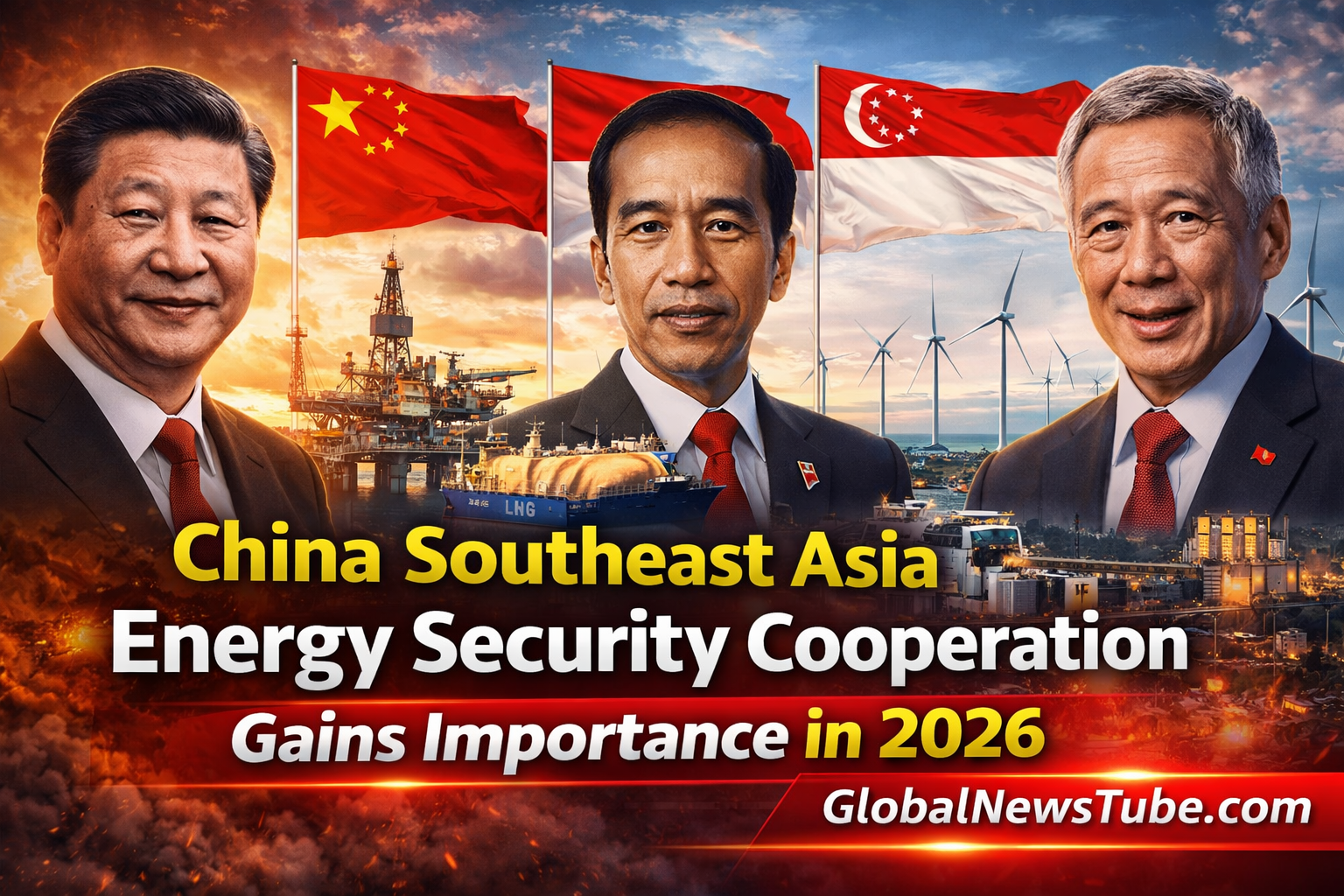
The conversation around China Southeast Asia energy security is becoming more important as the region faces rising pressure from global fuel volatility, declining domestic gas output in some markets, and the urgent need to build a more resilient energy system. China’s latest offer to work more closely with Southeast Asian countries on energy security reflects a wider regional shift governments are no longer thinking only about supply today, but also about how to secure power, fuel, infrastructure, and investment for the next decade. Southeast Asia is facing growing energy security challenges as it balances economic growth with transition pressures, while China is already deeply involved in the region through trade, infrastructure, and clean energy investment.
This makes the China Southeast Asia energy security issue more than a diplomatic slogan. It touches on power generation, grid resilience, liquefied natural gas imports, renewable energy financing, industrial growth, and geopolitical influence. China is already Southeast Asia’s largest trading partner and has invested heavily in regional infrastructure, including energy linked systems. At the same time, Southeast Asia is becoming more exposed to energy insecurity because of stronger demand growth and increasing dependence on imported fuels in several countries.
Why China Southeast Asia Energy Security Matters Now
The timing of Beijing’s outreach matters. Southeast Asia’s energy demand continues to rise as economies expand, urban populations grow, and industrial activity accelerates. Yet energy security in the region is under strain. The region’s clean energy transition still faces major investment and infrastructure gaps, while overreliance on external energy sources is becoming a growing vulnerability. Those pressures make outside partnerships more valuable, especially when they offer capital, technology, and supply coordination.
For China, offering help on regional energy security also serves a strategic purpose. Beijing has been working to strengthen its influence in Southeast Asia through economic diplomacy, infrastructure development, and policy engagement. That means energy cooperation is not only about keeping the lights on. It is also about shaping long term regional alignment and influence.
Energy Security Is No Longer Just About Oil and Gas
One reason the China Southeast Asia energy security topic is gaining traction is that energy security itself has changed. In the past, the concept was often limited to oil supply and fuel imports. Today, it includes electricity reliability, grid modernization, renewable capacity, battery storage, transmission networks, and resilience against geopolitical or shipping shocks.
That broader view fits Southeast Asia’s needs. Countries in the region are trying to expand electricity access, lower exposure to fossil fuel price swings, and attract manufacturing linked to cleaner energy supply chains. At the same time, many are not ready to abandon gas or imported fuels overnight. This means energy security now requires a mixed strategy protecting current supply while investing in a more flexible future. China, with its scale in manufacturing, clean technology, and infrastructure finance, is positioning itself as a partner in both areas.
How China Could Support Southeast Asia
In practical terms, China Southeast Asia energy security cooperation could develop in several directions. The first is infrastructure investment. Chinese companies and financiers have already played a large role in regional energy and transport development, and that experience could extend further into transmission, storage, and renewable generation. The second is technology transfer. China is a major supplier of solar panels, batteries, grid equipment, and other clean energy technologies that could help Southeast Asian governments accelerate projects at lower cost. The third is policy coordination, especially on regional energy planning and cross border investment frameworks.
This matters because Southeast Asia’s transition will not be solved by domestic policy alone. The capital needs are too large, and the technical requirements are too complex. Stronger partnerships can help countries avoid delays, reduce financing gaps, and move faster on projects that improve both energy access and energy resilience.
The Strategic Benefits for Beijing
China’s offer is not purely charitable. The China Southeast Asia energy security agenda also supports Beijing’s own economic and geopolitical goals. A deeper energy role helps China lock in export markets for its technology firms, strengthen diplomatic ties, and present itself as a reliable regional partner during a period of broader uncertainty.
There is also a competitive dimension. As global power rivalry sharpens, Southeast Asia has become an important arena where economic cooperation and security influence overlap. Energy is one of the most effective channels for influence because it touches daily life, industrial competitiveness, and national development. If China becomes even more central to the region’s energy future, its strategic weight in Southeast Asia will grow alongside its commercial presence.
Challenges and Risks for Southeast Asia
Even so, Southeast Asian governments are unlikely to embrace any single external partner without caution. The region has a long tradition of balancing major powers, and energy cooperation with China comes with both benefits and concerns. One concern is overdependence. If too much of the region’s grid equipment, energy financing, or technology supply becomes tied to one country, governments may worry about strategic vulnerability later.
Another challenge is political trust. Southeast Asia may welcome Chinese investment in energy, but that does not remove wider regional concerns about security competition and the South China Sea. That means the success of China Southeast Asia energy security cooperation will depend not only on economics, but also on whether Beijing can convince its neighbors that closer energy ties will remain stable, transparent, and mutually beneficial.
Clean Energy Could Be the Strongest Area of Cooperation
The most promising area for China Southeast Asia energy security cooperation may be clean energy. Southeast Asia needs stronger renewable investment, green industrialization, and better coordination to support a more ambitious transition by 2030. This is a natural fit because Southeast Asia needs more affordable clean power, while China has scale, industrial capacity, and experience in deploying renewable technologies quickly.
Clean energy cooperation also gives both sides political room. It is easier to frame solar, storage, transmission, and green manufacturing as development priorities than as hard geopolitical alignment. That makes renewables a practical bridge between Southeast Asia’s economic needs and China’s regional ambitions.
Regional Energy Security and Long Term Impact
The long term importance of China Southeast Asia energy security cooperation lies in how it could reshape the region’s development path. Energy is not a narrow policy issue. It affects manufacturing growth, digital infrastructure, transport systems, investment confidence, and public welfare. If Southeast Asia can build a more secure and diversified energy base, it will be better positioned to support industrial expansion and reduce exposure to global market shocks.
For China, stronger energy ties with Southeast Asia would support broader regional integration. It would also reinforce Beijing’s role as a provider of capital, technology, and development partnerships. This may help China build influence not only in energy policy, but also in trade and strategic decision making across the region.
At the same time, Southeast Asian countries are likely to continue seeking a balanced approach. They may welcome Chinese cooperation while also trying to diversify partnerships with other powers, multilateral institutions, and private investors. This balancing strategy will shape how far and how fast deeper cooperation can go.
Conclusion
The rise of China Southeast Asia energy security cooperation reflects a deeper transformation in regional politics and economics. Southeast Asia needs secure, affordable, and resilient energy systems to support growth. China wants to expand its regional role through trade, infrastructure, and strategic partnership. Those interests increasingly overlap. The result is a growing push for cooperation not only on immediate fuel security, but also on grids, renewables, financing, and long term resilience.
The opportunity is real, but so are the risks. If managed well, closer cooperation could help Southeast Asia build a stronger and more diversified energy future. If managed poorly, it could deepen dependency and strategic unease. That is why China Southeast Asia energy security will remain one of the most important regional energy themes to watch in 2026.