


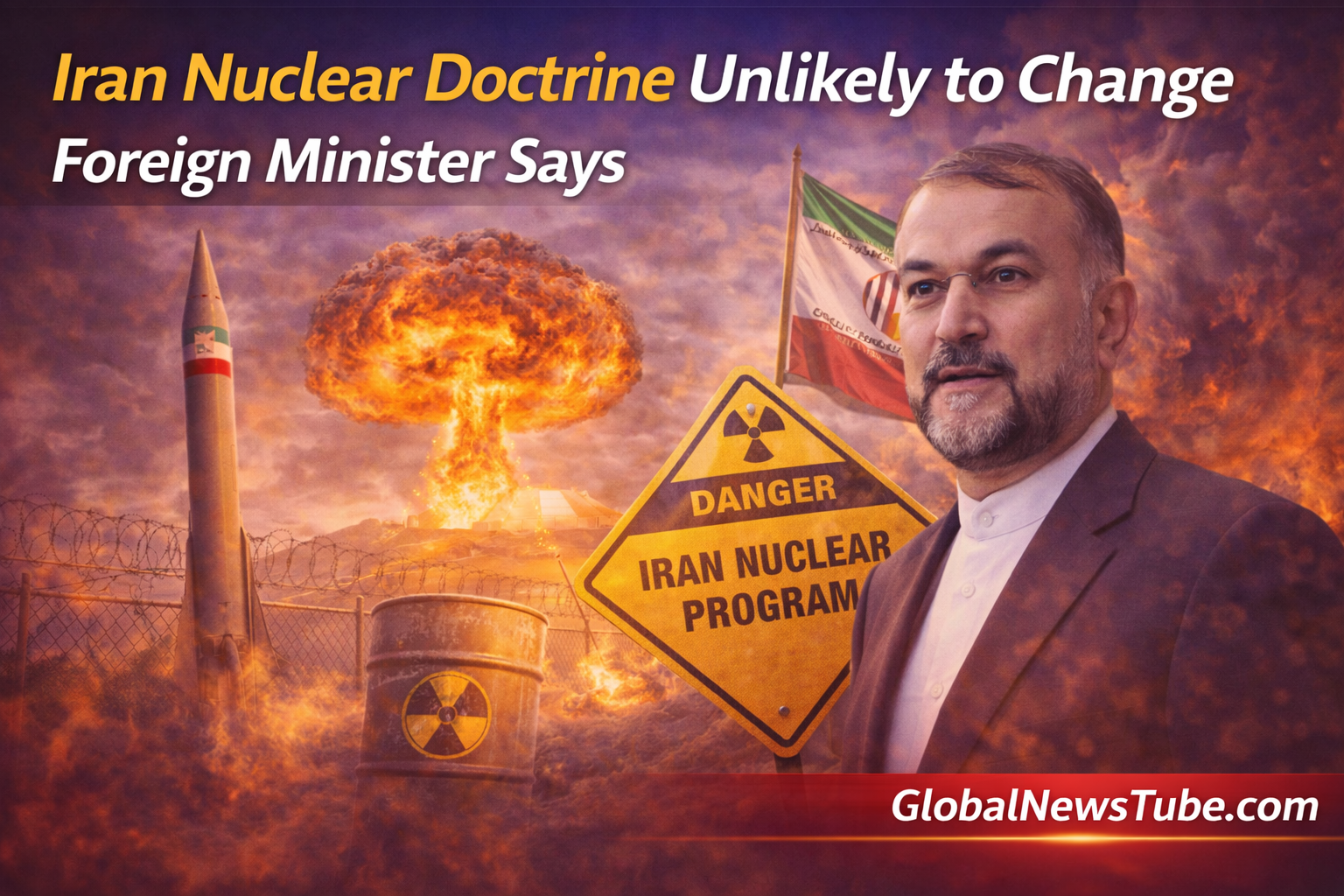
Iran Signals Continuity on Nuclear Policy
Iran nuclear doctrine is unlikely to change, according to Foreign Minister Abbas Araghchi, who said the country’s stance against developing nuclear weapons will not significantly shift even after the leadership transition now facing the Islamic Republic. He also cautioned that the new supreme leader has not yet publicly outlined his own position on the issue, leaving some room for uncertainty while still emphasizing continuity in state policy.
The statement matters because Iran’s nuclear doctrine sits at the heart of one of the most sensitive disputes in global politics. For years, Western governments, particularly the United States and Israel, have accused Tehran of seeking the capacity to build nuclear weapons. Iran, however, has long insisted that its nuclear programme is for civilian purposes, including energy and scientific development. Araghchi’s latest remarks are therefore more than a diplomatic sound bite. They are a direct attempt to reassure both domestic and international audiences that Iran does not intend to rewrite its core nuclear position in response to military pressure or political upheaval.
Why the Foreign Minister Statement Matters
The timing of the statement is critical. Araghchi linked the issue to the legacy of the late Ayatollah Ali Khamenei, who had opposed weapons of mass destruction through a fatwa issued in the early 2000s. Araghchi said fatwas depend on the Islamic jurist who issues them and noted that he was not yet in a position to judge the jurisprudential or political views of Mojtaba Khamenei, Iran’s new supreme leader. That means the official message is continuity, but with a recognition that the new leadership has not yet publicly restated the same doctrine in its own words.
This nuance is important for SEO readers trying to understand the real headline. Iran is not announcing a policy reversal. At the same time, it is not providing a fully new doctrinal declaration from the current supreme leader either. In practical terms, the foreign minister is signaling stability while acknowledging a transitional political moment.
The Role of the Fatwa in Iran Nuclear Policy
Any discussion of Iran nuclear doctrine must include the fatwa that has shaped the country’s official messaging for years. Iranian officials have repeatedly referenced Ayatollah Khamenei’s edict against nuclear weapons as evidence that Tehran rejects the development of weapons of mass destruction on religious and moral grounds. This has been one of Iran’s strongest arguments when defending its position in diplomatic forums and against allegations from foreign powers.
However, critics outside Iran have often argued that a religious ruling is not the same thing as a binding arms control agreement. That skepticism has persisted because international concern is driven not only by declarations, but also by enrichment levels, inspections and the broader verification system. The ongoing debate continues to focus on monitoring, transparency and whether Iran’s nuclear activities can be fully verified as peaceful.
International Pressure Still Shapes the Debate
Even if Iran nuclear doctrine does not change, global suspicion around Iran’s nuclear programme is unlikely to disappear. Western countries have accused Tehran for years of pursuing capabilities that could eventually support a weapons option, while Iran insists it seeks only peaceful nuclear rights. This disagreement remains one of the core reasons behind repeated diplomatic standoffs, sanctions and regional tension.
The broader geopolitical environment makes Araghchi’s comments even more significant. The region is already under immense strain, and the wider conflict involving Iran, Israel and the United States has intensified in 2026. In that setting, any sign that Iran might alter its nuclear doctrine would trigger immediate international alarm. By stating that policy is not likely to change, the foreign minister appears to be trying to prevent further escalation while defending Iran’s political narrative of consistency.
Leadership Transition Adds a Layer of Uncertainty
One of the most important aspects of this story is the connection between nuclear policy and leadership change. Araghchi made clear that he cannot yet define the jurisprudential or political outlook of Iran’s new supreme leader. That means observers should distinguish between the current state position and the possibility of future reinterpretation. The official doctrine may be stable today, but long-term clarity will likely depend on whether the new supreme leader publicly affirms, modifies or reframes the old fatwa based position.
This issue matters because Iran’s political system places enormous symbolic and practical weight on the supreme leader’s authority. When leadership transitions happen, foreign governments and analysts immediately look for signs of continuity or change. In this case, the foreign minister’s message suggests that the system wants to project steadiness rather than strategic ambiguity.
Why Civilian Use Remains Central to Iran Message
Iran continues to argue that its nuclear programme is civilian in nature. That framing remains central to its diplomatic defense. The international debate remains focused on whether Iran’s activities can be transparently verified as peaceful. At the same time, concern over enriched uranium stockpiles and inspection access means Iran’s public insistence on civilian use remains politically important.
What This Means Going Forward
The foreign minister’s comments suggest that Iran wants to avoid sending any signal that could justify additional pressure, sanctions or military escalation. By saying the doctrine is unlikely to change, Tehran is trying to preserve a line of continuity even during a time of political and regional instability. Still, uncertainty remains because the new supreme leader has not yet publicly defined his own position.
That leaves the world with a mixed picture. On one hand, Iran is communicating policy stability. On the other hand, questions about inspections, enrichment and future leadership messaging are still open. This means Iran nuclear doctrine will remain a major issue in diplomacy, security analysis and search trends in the months ahead.
Final Thoughts
Iran’s foreign minister has made Tehran’s position clear the country’s nuclear doctrine is not likely to change, even as the political system adjusts to new leadership. The statement is designed to project continuity, calm speculation and reinforce Iran’s claim that it does not seek nuclear weapons. Yet the wider debate is far from settled because international doubts, verification concerns and leadership uncertainty all remain in play.
For readers and analysts alike, the key point is simple. Iran is trying to show that its nuclear policy remains stable, but the world will keep judging that claim not only by official words, but by future actions, inspections and decisions from the country’s new top leadership.