


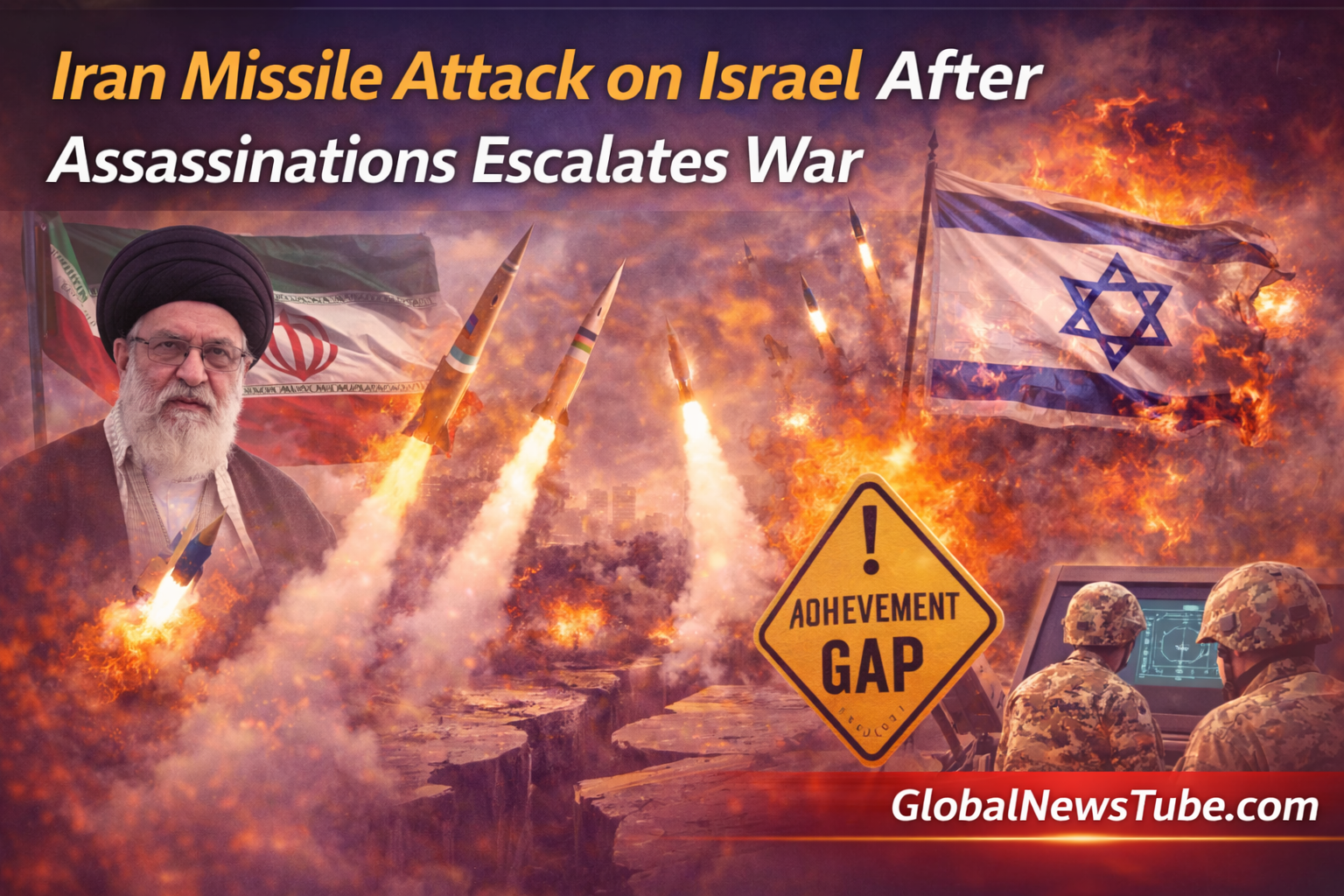
A New Phase in the Iran Israel Conflict
The latest Iran missile attack on Israel has pushed the Middle East into a more dangerous phase, with both sides moving deeper into direct confrontation. The strike came after high profile assassinations inside Iran, which Tehran described as a major provocation and a direct assault on its leadership structure. Iran launched missiles in what it called revenge for the killings, while Israel continued air operations linked to the widening war.
This moment matters because it shows how quickly the crisis is evolving. What may once have been viewed as a shadow conflict has now become an open exchange of military force with regional consequences. For global observers, the main concern is no longer whether the Iran Israel conflict will intensify, but how far it could spread if neither side steps back.
Why the Assassinations Triggered a Fast Response
Iran framed the missile barrage as retaliation for the assassinations of senior figures, including Ali Larijani and Gholamreza Soleimani, who were reported killed in Israeli strikes. The deaths of such senior officials carry enormous symbolic and strategic weight. They are not only military or political losses, but also public blows to the state’s authority and image of resilience.
For Tehran, responding quickly was likely seen as necessary for both domestic and regional reasons. Internally, the government had to show strength after a major breach. Externally, it wanted to send a message that attacks on senior Iranian leadership would not go unanswered. That explains why the Iran missile attack on Israel was presented as revenge and not merely as a military operation.
How the Missile Attack Changed the Situation
Reports indicate that the strike targeted central Israel and involved advanced missiles, including multiple warhead systems that can complicate interception efforts. Two people were reported killed near Tel Aviv, with additional injuries and damage caused by falling debris and impacts. That made the attack significant not only politically, but also operationally, because it challenged the defensive systems Israel relies on in moments of crisis.
The direct human toll also changes public perception. When attacks result in deaths inside major population centers, the pressure on leaders rises immediately. Israeli decision makers are then pushed toward a harsher response, while Iranian leaders may feel encouraged to show that their retaliation had visible impact. This dynamic makes de escalation more difficult.
Israel Continued Strikes Add to Regional Tension
At the same time Iran was launching missiles, Israel was continuing attacks inside Iran. One strike reportedly hit a judiciary related site in southern Iran, while other attacks were said to have caused civilian casualties in western parts of the country. Iran also informed the International Atomic Energy Agency that a projectile hit the premises of the Bushehr Nuclear Power Plant, though no damage to the facility or injuries were reported.
These developments show that the crisis is not limited to isolated retaliation. It is now part of an expanding military confrontation involving repeated attacks, infrastructure concerns and fears about strategic sites. Any future strike near nuclear related facilities would immediately raise alarm far beyond the region, especially among governments worried about contamination, supply shocks and broader conflict.
Why This Matters Beyond Iran and Israel
The Iran missile attack on Israel is not just another headline in a long running rivalry. It has serious regional and global implications. The confrontation has already spilled into wider Gulf security concerns, with alerts and instability affecting neighboring countries as tensions rise. That means the risk is no longer confined to two states alone.
This matters for several reasons. First, wider instability threatens energy routes and commercial confidence across the Gulf. Second, more countries could be pulled into military or diplomatic responses. Third, every new wave of attacks raises the possibility of miscalculation. In a crisis like this, a strike on the wrong target, a failed interception or an inaccurate intelligence assessment can produce a much larger war.
The Political Message Behind Iran Response
Iran’s leadership also appears focused on projecting continuity after the assassinations. Officials insisted the political system remains stable despite the loss of senior figures. That messaging is important because Israel’s strategy may partly be aimed at weakening Iran’s command structure and sense of internal control. Tehran, in turn, wants to show that eliminating top officials will not collapse decision making or reduce its ability to retaliate.
In that sense, the missile attack served more than one purpose. It was military retaliation, political signaling and domestic theater all at once. Iran needed to reassure supporters, deter adversaries and reinforce the narrative that it still controls the pace of its response.
What Comes Next in the Conflict
The most immediate question is whether this exchange remains limited or becomes the foundation for a broader regional war. If Israel responds with more assassinations or deeper strikes, Iran may launch additional missile attacks or expand pressure through allied networks and regional partners. If international diplomacy fails to intervene quickly, both sides may continue escalating in ways that become harder to reverse.
There is also the issue of public endurance. In Israel, repeated missile alerts and civilian casualties create demand for stronger retaliation. In Iran, continued strikes and assassinations deepen anger and nationalism. That combination reduces political space for restraint.
Final Thoughts
The Iran missile attack on Israel after assassinations marks a turning point in the 2026 crisis. It is a reminder that leadership killings, symbolic retaliation and direct missile exchanges can transform an already unstable rivalry into a far more dangerous war. The longer this cycle continues, the greater the risk that surrounding states, strategic infrastructure and civilian populations will suffer.
For now, the world is watching a conflict that has clearly entered a harsher phase. The central question is no longer whether the confrontation is serious. It is whether any power involved still has both the will and the leverage to stop it from becoming something much worse.