


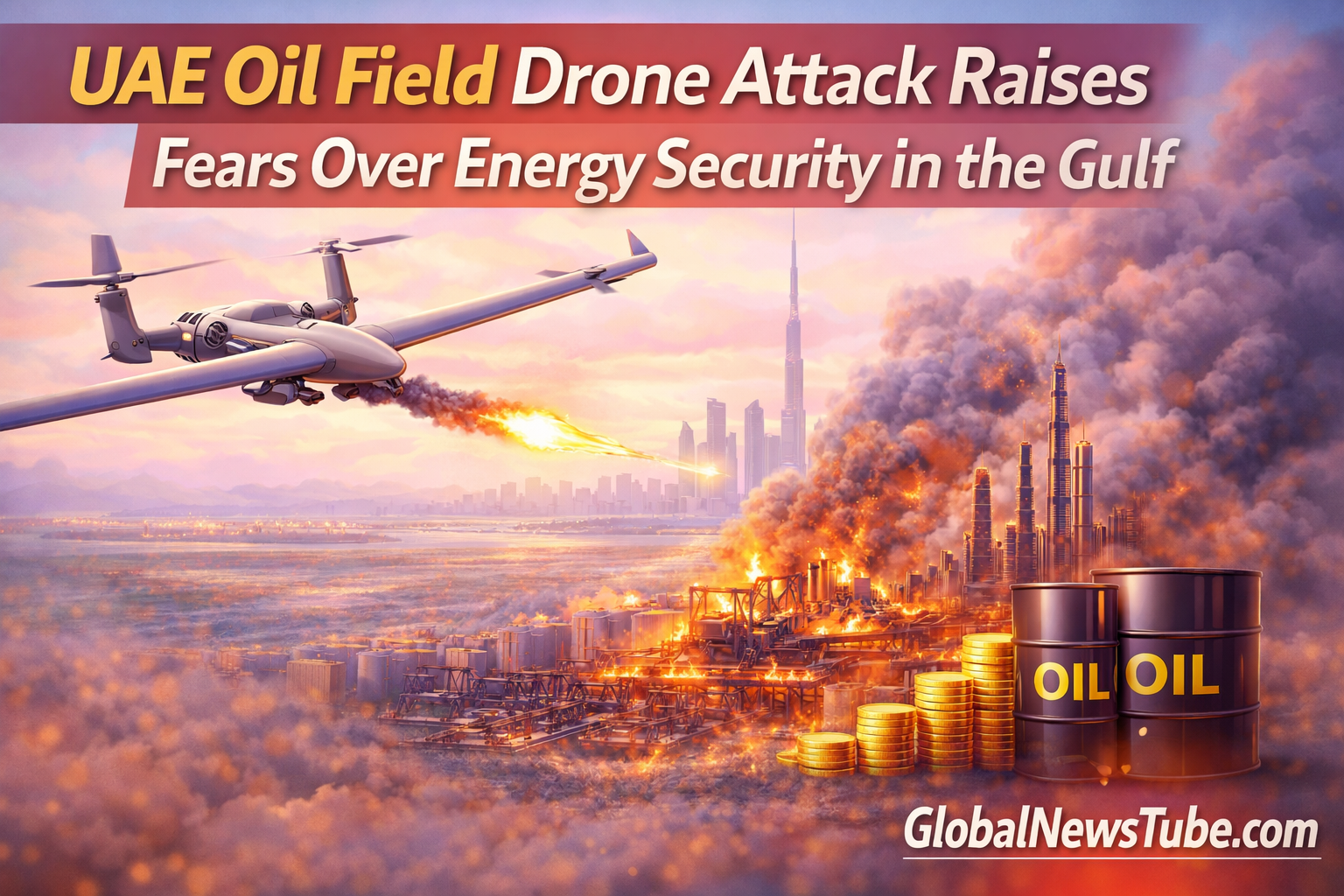
UAE Oil Field Drone Attack Raises Fears Over Energy Security in the Gulf
A UAE oil field drone attack has once again highlighted how vulnerable energy infrastructure in the Gulf can be during times of regional conflict. A drone strike triggered a fire at the Shah oil field in the United Arab Emirates, renewing concerns about regional stability and oil market disruption.
The Shah oil field is located around 230 kilometers south of Abu Dhabi and has a production capacity of about 70,000 barrels of crude oil per day. This makes it an important part of the UAE’s broader energy system. Even though it is not the country’s largest producing site, any disruption at such a facility sends a strong message to markets, policymakers, and energy traders that the Gulf’s oil infrastructure remains exposed to geopolitical threats.
Why the Shah Oil Field Attack Matters
The Shah oil field fire matters for two key reasons. First, it shows that critical oil production sites remain potential targets in a widening regional conflict. Second, it adds to growing fears about whether Gulf oil flows can remain stable if attacks continue or spread to other facilities, pipelines, ports, or shipping routes.
In energy markets, perception is often as important as physical damage. A single drone strike on an oil producing field may not immediately remove a huge amount of crude from the market, but it does raise risk levels. Investors and traders begin pricing in the possibility of more attacks, tighter shipping conditions, higher insurance costs, and weaker export confidence. This is why incidents like this often affect the market beyond the immediate fire or damage.
Pressure on UAE Energy Infrastructure
This latest drone strike in the UAE did not happen in isolation. It reflects rising pressure on the country’s energy infrastructure during a period of heightened regional tension. When important facilities such as oil fields and refineries come under threat, the wider energy chain becomes more fragile.
The UAE has invested heavily in building a strong and modern oil sector, with facilities that support both domestic growth and international exports. However, attacks on energy sites create operational and financial challenges. Even when damage is limited, companies may still need to suspend activity, review safety procedures, inspect equipment, and strengthen worker protection.
Repeated security incidents can also force operators to rethink how they manage risk. This includes upgrading surveillance systems, tightening response procedures, and strengthening infrastructure protection. The message is clear energy sites in the Gulf must now operate with a higher level of security awareness than ever before.
Impact on Global Oil Markets
The effects of an ADNOC oil field attack are not limited to the UAE. The Gulf remains one of the world’s most important energy producing regions, and any threat to production or transportation tends to influence oil prices. When markets fear reduced supply, they usually respond with price volatility.
This matters because oil is deeply connected to the global economy. Higher prices can increase transportation costs, raise inflation, and put pressure on businesses and households. Countries that rely heavily on imported oil are especially vulnerable to sudden price jumps caused by instability in the Middle East.
Asian markets are particularly sensitive to disruptions in Gulf energy supplies, as many refineries depend on crude from the region. If instability continues, the economic impact could spread across aviation, shipping, manufacturing, and power generation. That is why even a single attack on an oil field gets worldwide attention.
Security Risks and Regional Tensions
The timing of the UAE oil field drone attack is highly significant. It comes during a broader phase of military and political tension in the Gulf. This makes the incident much more than a local industrial problem. It is part of a wider security crisis that could affect multiple countries, trade routes, and major energy assets.
For the UAE, the challenge is not only to protect infrastructure but also to maintain confidence in its oil sector. Governments and national energy companies must show that production can continue safely and that emergency systems are functioning effectively. At the same time, they must improve defenses around major oil and gas facilities.
This attack also reflects a broader shift in modern conflict. In the past, damaging an oil facility often required a large military operation. Today, drones have changed that reality. They can be launched at lower cost, strike from a distance, and create major disruption within minutes. This makes oil fields, refineries, and export terminals especially vulnerable during regional crises.
What Could Happen Next
What happens next will depend on the scale of damage, the speed of recovery, and whether further attacks take place. If the fire at the Shah field is contained quickly and production resumes without serious interruption, markets may calm down. But if more sites are targeted, the situation could become much more serious.
Longer term disruption would not only affect UAE production but could also deepen fears about the security of Gulf oil exports as a whole. That could push oil prices even higher and increase uncertainty in global markets. For energy importing countries, this would mean more pressure on fuel costs and economic planning.
For now, the incident is a strong reminder that UAE energy infrastructure remains crucial to both regional and global oil supply, yet it is operating in an increasingly risky environment. Even when immediate losses appear limited, the strategic signal is powerful energy security in the Gulf can no longer be taken for granted.
Conclusion
The UAE oil field drone attack at Shah is not just another regional headline. It is a serious development with wider implications for oil supply, investor confidence, and Middle East security. As long as tensions remain high, every attack on critical infrastructure will be watched closely by governments, traders, and consumers around the world.
The incident shows how quickly regional conflict can threaten energy stability. It also underlines the need for stronger protection of oil facilities and better crisis response planning. In the days ahead, attention will remain focused on whether the UAE can contain the damage and prevent further disruption.