


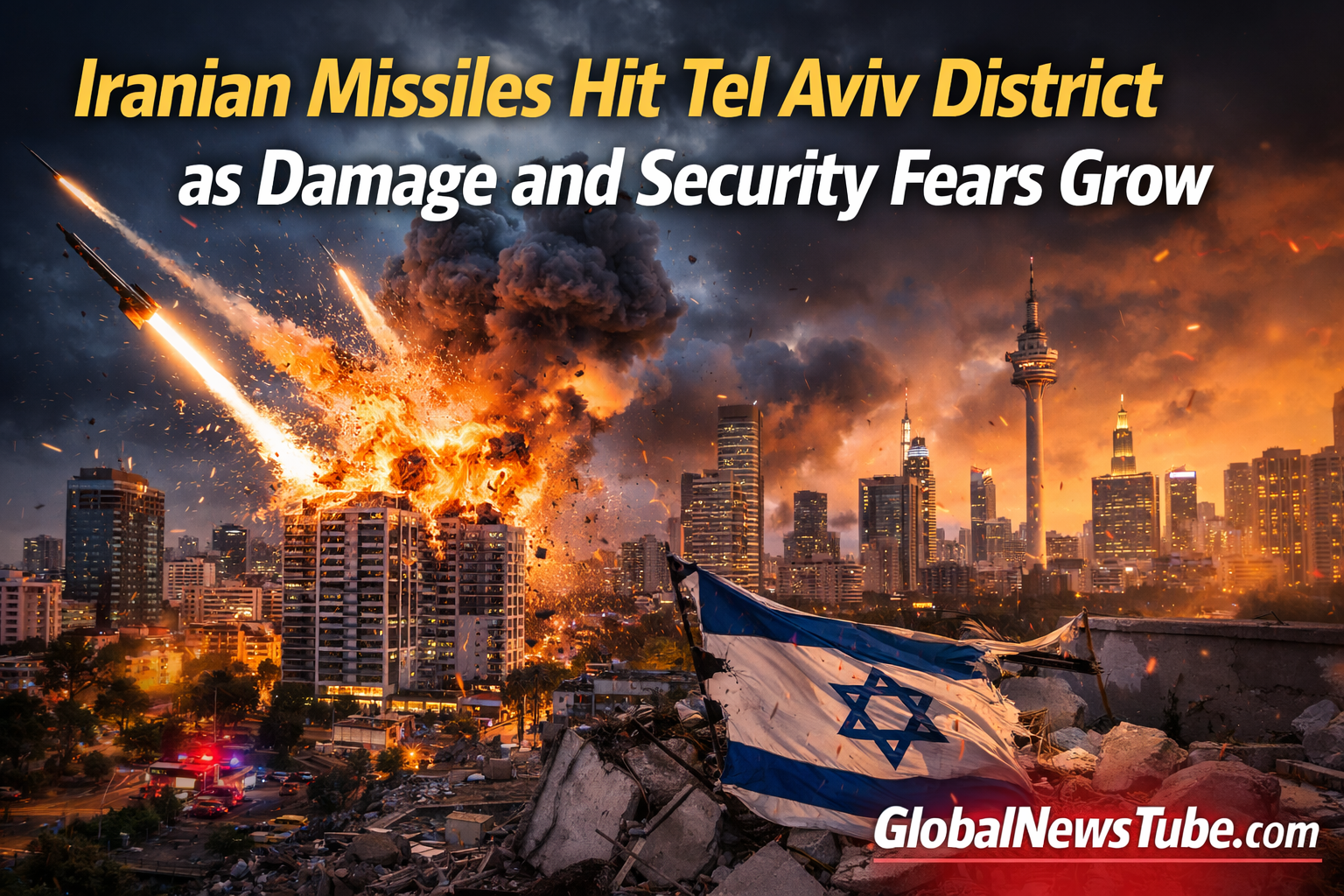
Iranian Missiles Hit Tel Aviv District as Damage and Security Fears Grow
The latest reports that Iranian missiles hit Tel Aviv district have added a new layer of fear and uncertainty to an already dangerous regional crisis. Images from the area showed cars burned, one vehicle overturned, and visible damage caused by shrapnel after a wave of Iranian missiles struck central Israel. According to local police, three people were wounded in the incident. The attack was reported on March 15, 2026, and was presented as part of a broader wave of Iranian missile fire targeting central Israel.
This kind of attack matters far beyond the immediate damage. When missiles strike a major urban district and leave civilian areas scarred by fire and debris, the psychological effect can be as significant as the physical destruction. Residents are reminded that modern conflict is no longer limited to military facilities or remote battlefields. Instead, homes, streets, vehicles, and ordinary neighborhoods can suddenly become part of the front line. That is why the phrase Iranian missiles hit Tel Aviv district has quickly become central to discussions about regional escalation, civilian safety, and the wider risks of the current confrontation.
What Happened in the Tel Aviv District
Reports described a town in the Tel Aviv district where cars were seen burned and one was overturned after shrapnel fell following a wave of Iranian missiles. Police said three people were wounded. While the report focused on the visible aftermath rather than a full operational breakdown, the images and description were enough to show the seriousness of the strike’s impact on a civilian area. The incident highlights how even when a missile does not produce mass casualties, falling debris and shrapnel can still inflict substantial damage and create fear among the local population.
The visual evidence matters because it gives the public a direct picture of what missile warfare looks like on the ground. Burned vehicles and overturned cars are not abstract symbols. They show how explosive fragments can transform an ordinary street into a scene of destruction within moments. For residents, the attack is not just a headline about geopolitics. It is a personal reminder of vulnerability.
Why This Attack Matters
The fact that Iranian missiles hit Tel Aviv district is significant because Tel Aviv and its surrounding areas are among the most densely populated and economically important parts of Israel. Any strike or falling shrapnel in this zone immediately raises concerns about civilian exposure, emergency preparedness, and the ability of authorities to contain panic. Even if the direct casualty count remains limited, the broader implications can be severe.
Attacks like this also deepen the sense that the conflict is widening in both scale and intensity. Central Israel is not a symbolic location in regional reporting. It is a major population center, a financial hub, and a place where disruptions can have political, economic, and social consequences. A strike there sends a message that the threat is not distant or isolated. It is immediate and visible.
Civilian Areas Are Bearing the Cost
One of the clearest lessons from the reported incident is that civilians continue to bear the cost of regional escalation. Cars were damaged, streets were affected, and people were injured in an area not described as a frontline military zone. This is one of the defining features of modern missile conflict even when attacks are framed in strategic or retaliatory terms, ordinary people often absorb the shock.
The human effect of such incidents often extends beyond those directly injured. Families in the area may experience trauma, businesses may close temporarily, traffic and daily routines may be disrupted, and communities may remain on edge long after emergency crews leave. The physical cleanup can happen faster than the emotional recovery. That is why incidents involving shrapnel and urban damage can shape public mood far beyond their immediate casualty numbers.
The Role of Shrapnel in Urban Damage
The report specifically noted that the damage was caused by shrapnel after the missile wave. This detail is important because it shows that harm in missile attacks does not come only from a direct strike. Interceptions, impacts, or fragmented explosive components can still scatter dangerous debris across residential and urban areas.
In densely populated places, shrapnel can be especially destructive. It can puncture vehicles, ignite fires, damage buildings, and injure bystanders in seconds. Even when defense systems reduce the scale of destruction, the remaining fragments can still create chaos on the ground. That means the public conversation is not only about whether missiles were intercepted, but also about what happens to the debris that falls afterward.
Security Fears Are Growing in Israel
When Iranian missiles hit Tel Aviv district, the immediate issue is emergency response. But the longer term issue is public confidence. People want to know whether similar strikes could happen again, whether defenses are enough, and how authorities will respond if the pace of attacks increases. Security is not measured only by interception rates or military statements. It is also measured by whether civilians feel protected in their own neighborhoods.
This latest incident is likely to add pressure on Israeli security planning, local preparedness, and political decision making. Visible damage in central Israel can quickly intensify public demand for stronger responses, better protection, and clearer communication. In conflicts like this, each strike does more than cause immediate damage. It also shifts the political environment and shapes what leaders believe they must do next.
Regional Escalation Remains the Bigger Threat
Although the report focused on one specific incident, the wider concern is escalation. A wave of Iranian missiles reaching central Israel suggests that the confrontation is continuing to unfold in ways that affect major civilian centers. Each new strike increases the risk of retaliation, broader military action, and a deeper cycle of attack and response.
That is what makes this moment especially dangerous. When attacks begin to leave visible scars in places like the Tel Aviv district, the pressure for escalation grows on all sides. Civilian damage, even when limited, can harden public attitudes and reduce political space for restraint. The result is a conflict environment where symbolic and emotional reactions become almost as powerful as strategic calculations.
Conclusion
The report that Iranian missiles hit Tel Aviv district is more than a brief update about damaged vehicles and injuries. It is a sign of how dangerous and unpredictable the current regional crisis has become. Burned cars, overturned vehicles, and wounded civilians show the real world cost of missile warfare in urban areas. The damage followed a wave of Iranian missiles and left at least three people injured, underscoring how quickly central civilian areas can be affected.
As tensions continue, this incident stands as a warning. The danger is no longer theoretical, and the consequences are no longer confined to distant military targets. In the Tel Aviv district, the impact was immediate, visible, and deeply unsettling. That is why this attack matters not only as a news event, but as part of a larger and more alarming regional story.