


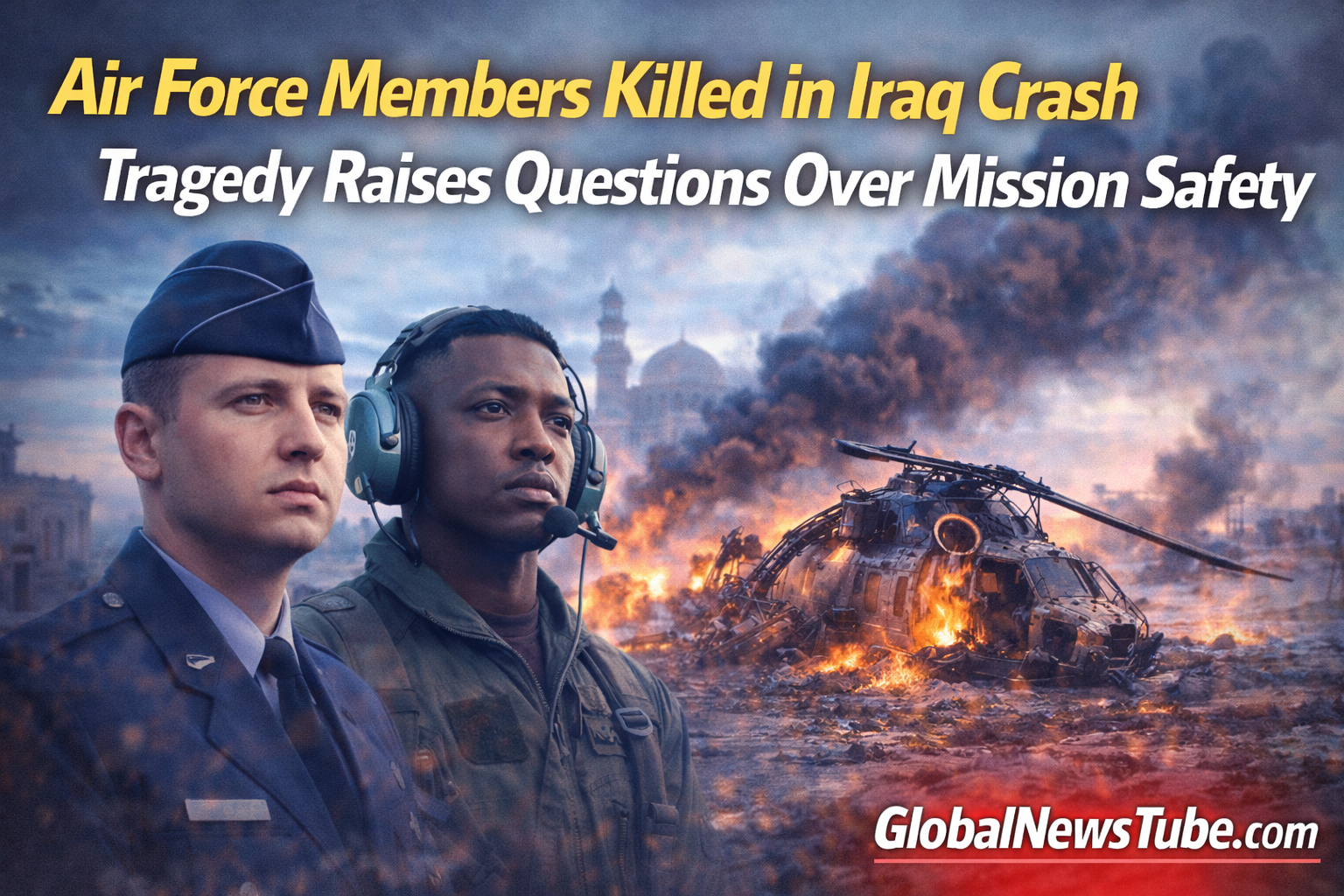
Air Force Members Killed in Iraq Crash Tragedy Raises Questions Over Mission Safety
The news that Air Force members killed in Iraq crash has shocked military families, service communities, and the wider public. The incident, which involved a US KC-135 Stratotanker operating in western Iraq, claimed the lives of six service members during a mission supporting Operation Epic Fury. US Central Command said the crash happened in friendly airspace and was not caused by hostile fire or friendly fire, though the full circumstances remain under investigation.
The loss is significant not only because of the number of lives taken, but also because of what it reveals about the risks faced by military personnel even outside direct enemy engagement. For many Americans, this tragedy is a painful reminder that service in conflict linked operations carries danger at every stage, including transport, support, and aerial refueling missions. The deaths of these six airmen have renewed attention on military aviation safety, operational pressure, and the emotional toll placed on service families.
What Happened in the Iraq Aircraft Crash
According to reports, the aircraft involved was a KC-135 Stratotanker, a refueling plane used to extend the range and endurance of combat and support aircraft. The crash took place on March 12, 2026, in western Iraq during a mission tied to Operation Epic Fury. One aircraft went down, while another aircraft involved in the incident landed safely. Officials said the event took place in friendly airspace, ruling out enemy attack as the immediate cause.
That detail matters because it changes the public understanding of the event. When a military crash is not linked to hostile fire, attention quickly shifts to operational conditions, mechanical reliability, air coordination, and mission planning. Investigators are expected to examine every aspect of the flight, from technical systems to crew communication. Until the inquiry is complete, many questions will remain unanswered, but the impact of the loss is already being felt across the military community.
The Six Service Members Lost
The Pentagon identified the six airmen killed in the crash as Maj. John A. Klinner, Capt. Ariana G. Savino, Tech. Sgt. Ashley B. Pruitt, Capt. Seth R. Koval, Capt. Curtis J. Angst, and Tech. Sgt. Tyler H. Simmons. Three were assigned to the 6th Air Refueling Wing at MacDill Air Force Base in Florida, and three were assigned to the 121st Air Refueling Wing at Rickenbacker Air National Guard Base in Ohio.
Behind every uniform was a full life, a family, and a future. Reports described some of the airmen as dedicated professionals, parents, mentors, and respected colleagues. Their deaths have drawn tributes from fellow service members, elected officials, and local communities. The personal stories emerging after the crash remind the public that military casualties are never just numbers. They are people who served with skill, discipline, and commitment.
Why This Military Plane Crash Matters
The phrase Air Force members killed in Iraq crash is now part of a larger national conversation about risk, readiness, and accountability. Military refueling aircraft are essential to modern operations. They allow fighters, bombers, and support aircraft to stay in the air longer and operate at greater range. Because of that, these missions are often routine in appearance but highly sensitive in execution. A single failure in judgment, systems, or coordination can have devastating results.
This tragedy also highlights how support missions can be just as dangerous as direct combat assignments. Even when enemy fire is not involved, crews operate in demanding environments shaped by fatigue, pressure, logistics, and technical complexity. That is why each crash becomes more than a headline. It becomes a test of whether the military can learn, adapt, and improve safety without weakening mission effectiveness.
Aircraft Safety and Mission Pressure
The KC-135 has served for decades and remains one of the most important refueling aircraft in US operations. Its long service history also means that maintenance, modernization, and operational demands are constant concerns. When a fatal crash occurs, public confidence depends on a transparent review process and a clear explanation of what happened. Families deserve answers, and the armed forces need lessons that can prevent another loss of life.
The Human Cost of Military Service
Beyond the investigation, the emotional impact is immediate. Families who sent loved ones into service now face grief that arrived without warning. Bases in Florida and Ohio are mourning the loss of airmen who were known as teammates, leaders, and friends. Community tributes and official statements show how deeply these deaths have been felt.
For the public, moments like this create a rare pause in the speed of daily news. They force people to think about the quiet sacrifices made by those serving abroad. Military operations are often discussed in strategic language, but crashes like this bring everything back to the human level. They remind the nation that every mission carries real lives, real families, and real consequences.
What Comes Next After the Iraq Crash
The investigation will likely determine the technical and operational causes of the crash, but the broader response will matter just as much. The military will need to evaluate procedures, communicate findings clearly, and support the families and units affected. Public trust depends not only on honoring the dead, but on showing that their loss leads to meaningful action.
The deaths of six Air Force members in Iraq have become a defining reminder of the hidden dangers of military aviation. As the country mourns, the central question is no longer only what happened, but what will change because of it.
Conclusion
The Air Force members killed in Iraq crash is one of sacrifice, sorrow, and urgent reflection. Six service members lost their lives in a mission that ended in tragedy, despite taking place outside hostile fire. Their deaths underscore the realities of military service and the constant need for safety, accountability, and support for those in uniform. As investigators work to uncover the cause, the memory of these airmen will remain at the center of the national response.