


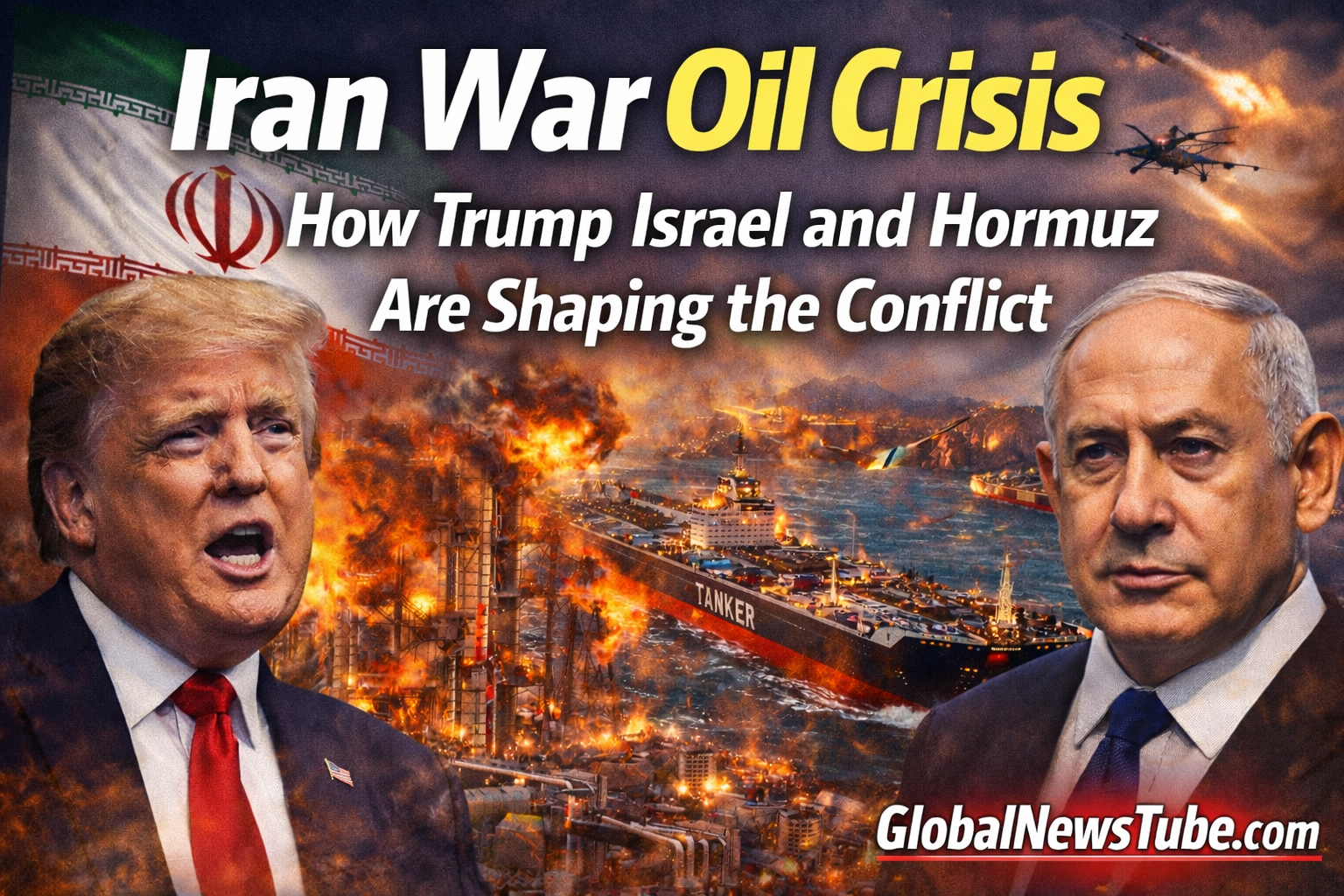
Iran War Oil Crisis How Trump Israel and Hormuz Are Shaping the Conflict
The Iran war oil crisis has become one of the defining global stories of 2026, as the conflict between Iran, the United States, and Israel expands beyond direct military strikes and into the global energy system. What began as a battlefield confrontation is now affecting oil shipping, tanker security, Gulf infrastructure, international markets, and political calculations in Washington.
The focus keyword Iran war oil crisis fits this moment because the oil dimension is no longer secondary. The conflict is now tied directly to the Strait of Hormuz, one of the world’s most important energy chokepoints. As threats to shipping increase, fears over supply disruption, rising prices, and wider economic fallout have moved to the center of international attention.
Why the Iran War Oil Crisis Matters
The reason the Iran war oil crisis matters so much is simple it combines war, energy, and geopolitics in one dangerous flashpoint. The Strait of Hormuz is among the world’s most important routes for oil and gas transport. When conflict threatens that passage, the consequences extend far beyond the Middle East.
A disruption in Hormuz affects crude prices, shipping insurance, refinery planning, inflation risk, and energy security in Europe and Asia. This makes the current war different from a conventional regional conflict. It is not only about military retaliation. It is also about whether the global economy can absorb another major energy shock.
That is why markets, governments, and energy companies are watching every development so closely. Even limited disruption in the Gulf can create uncertainty across global supply chains and push up pressure on already fragile economies.
Trump Iran War Strategy Under Scrutiny
The phrase Trump Iran war has become central to the story because President Donald Trump is not simply reacting to events. He is actively shaping the American response. His public statements and military posture have made the White House a major part of the conflict narrative.
This matters because military action in the Gulf now overlaps with political messaging from Washington. The United States is clearly signaling that oil movement and freedom of navigation are strategic priorities. That means the war is being fought not only with missiles and air strikes, but also through control of shipping lanes and regional deterrence.
At the same time, pressure is growing inside the United States over the war’s goals, costs, and consequences. Questions are building about how far Washington is willing to go, how long it will remain engaged at its current level, and whether the administration has a clear endgame.
This makes Trump Iran war more than a military topic. It is also a domestic political issue tied to oil prices, global markets, and public opinion.
Israel Iran Attacks and the Broader Regional Fallout
The Israel Iran attacks remain the military center of the conflict, but their effects now stretch far beyond direct battlefield exchanges. Civilian casualties, infrastructure damage, and retaliatory missile attacks have widened the crisis and increased fears of long term regional instability.
This broader fallout matters because it connects military escalation to oil market anxiety. The more the war spreads across the Gulf, the greater the chance that ports, tankers, refineries, and trade routes become part of the conflict environment. That risk alone is enough to move global markets.
The result is that Israel Iran attacks are no longer being measured only in military terms. They are also being judged by what they do to diplomacy, energy supply, commercial shipping, and investor confidence.
That shift is important for SEO as well. Readers searching for updates are not only looking for battlefield details. They also want to understand how the conflict affects oil, prices, and the wider world economy.
Strait of Hormuz Oil Shock Fears Intensify
No issue captures the Iran war oil crisis better than the threat to the Strait of Hormuz oil route. A major share of global oil trade moves through that narrow passage, making it one of the most sensitive strategic points in the world.
If the strait is disrupted, the impact is immediate. Oil prices become more volatile, tanker insurance costs rise, shipping companies consider alternative routes, and governments begin discussing emergency supply plans. Even the possibility of escalation in Hormuz is enough to send warning signals through global markets.
This is why the Strait of Hormuz has become such a central part of the war narrative. It gives Iran strategic leverage, raises pressure on the United States and Gulf allies, and turns a regional military conflict into a global economic threat.
For readers and search engines alike, this is exactly why Iran war oil crisis works so well as a focus keyword. It captures the conflict itself and the main reason people around the world are paying attention.
Economic Risks Beyond the Battlefield
One of the most serious consequences of the Iran war oil crisis is the risk of a wider economic shock. Conflict in the Gulf does not stay local when energy exports are involved. Rising oil prices can quickly affect transport costs, manufacturing, food prices, and inflation across multiple continents.
This means the war’s consequences are not limited to the Middle East. Households, businesses, and governments far from the battlefield may still feel its effects through higher fuel costs and weaker economic confidence. That is why every attack near key energy routes creates concern well beyond the immediate conflict zone.
The crisis also increases uncertainty for global investors and shipping firms. When commercial movement becomes harder to predict, the economic effects can spread quickly through trade networks and financial markets.
What Happens Next
The most important question now is whether the conflict remains a high intensity regional war or turns into a prolonged oil and shipping crisis. Both risks remain very real. The United States appears determined to keep major routes open, Iran sees Hormuz as a strategic point of pressure, and Israel’s campaign continues to fuel retaliation across the region.
If the strait remains unstable, the next phase of the war may be defined less by dramatic headlines and more by tanker disruption, insurance spikes, emergency oil planning, and inflation pressure. That would transform the conflict from a regional war into a much broader global economic crisis.
This is why the focus keyword Iran war oil crisis remains so strong. It reflects not only what is happening now, but also what could happen next if the conflict continues to spread.
Conclusion
The Iran war oil crisis is now the clearest way to understand the broader importance of this conflict. Trumps response, Israel military actions, Iran retaliation, and the threat to the Strait of Hormuz have all combined to make energy security central to the story.